01TIMER.COM / Timing system guides / Equipment comparison
Photocell vs Laser Timing Gates: Coach's Guide
Photocell and laser timing gates can both automate a start, split, or finish. The choice becomes clearer when you compare how each system defines the beam, handles an interruption, and fits the test you actually run.
Start with the measurement, not the label
A timing gate records an event when an athlete interrupts a sensing line. That simple description hides the details that affect a result: beam height, whether a reflector is required, how wide the sensing area is, what part of the body breaks the line first, and whether the system processes the signal before showing a time.
For a long sprint with a finish gate, small differences may matter less than they do in a short acceleration split. For a 5m or 10m split, a hand or foot can cross the beam before the torso. A 2017 comparison of single-beam infrared photocell, single-beam laser with a microprocessor, and video timing found that the trigger point and the athlete's initial body position influenced short-sprint differences. Read the published study abstract for the study design and limitations.
What the two technologies have in common
Both systems can remove the judgement involved in starting and stopping a handheld stopwatch. Both can support split timing when multiple points are installed. Neither automatically makes a protocol repeatable. Course layout, start instructions, alignment, athlete path, and result recording still belong in the test plan.
| Question | Why it matters | What to check in the product documentation |
|---|---|---|
| What creates the timing line? | The line must stay stable for the athlete path and the venue. | Sensor type, emitter/receiver or reflector arrangement, and stated operating range. |
| What can trigger it? | An early arm or leg break can change a short split. | Beam height guidance, dual-beam design, filtering, or signal-processing notes. |
| How is it aligned? | Alignment affects setup time and missed triggers. | Alignment procedure, indicator lights, mounting method, and outdoor-use notes. |
| How is the result reviewed? | Busy sessions need an obvious way to identify an odd result. | Display behavior, stored results, export options, and manual review workflow. |
Photocell timing gates
Traditional photocell systems commonly send an infrared beam between an emitter and a reflector or receiver. They can be a good fit when a coach wants a familiar beam setup and a straightforward start or finish line. A single beam is simple, but it can respond to the first body segment that breaks the line.
Dual photocells place two sensing lines at different heights. A system may use the relationship between those breaks to reduce a false trigger, but the exact rule varies by product. Ask how the model decides that the athlete has crossed, and whether that rule is appropriate for your start position and movement pattern.
Laser timing gates
Laser systems also create a narrow sensing line, often with a reflector or a dedicated receiving unit. The beam can make a precise lane boundary, but that precision makes placement and alignment important. Check the working distance, alignment feedback, mounting stability, and the effect of the venue before committing to a layout.
A laser label is not a guarantee of a particular accuracy or workflow. Some systems include processing that examines the interruption; others expose a simpler trigger. Use the model's manual as the source of truth. The laser timing gates guide explains the practical setup questions, while the current product page should govern specifications.
Choose by test length and operating conditions
- Short acceleration splits: prioritize a trigger rule that limits unwanted breaks, a repeatable starting position, and a way to review outliers.
- 30m to 100m sprints: place the finish gate where athletes will run through it, keep the start method consistent, and document any split points that answer a coaching question.
- Agility or shuttle tests: protect the equipment from contact, mark the route clearly, and test the direction changes before scored attempts.
- Outdoor or temporary venues: check line of sight, sunlight, wind, mounting, power, and radio or cable paths at the actual site.
A quick buying checklist
Before comparing prices, write down the number of lanes, timing points, start method, longest distance between units, result display needs, data-retention needs, and who will operate the system. Then ask each supplier the same questions. A cheaper sensor is not a saving if staff cannot align it or explain an unexpected trigger.
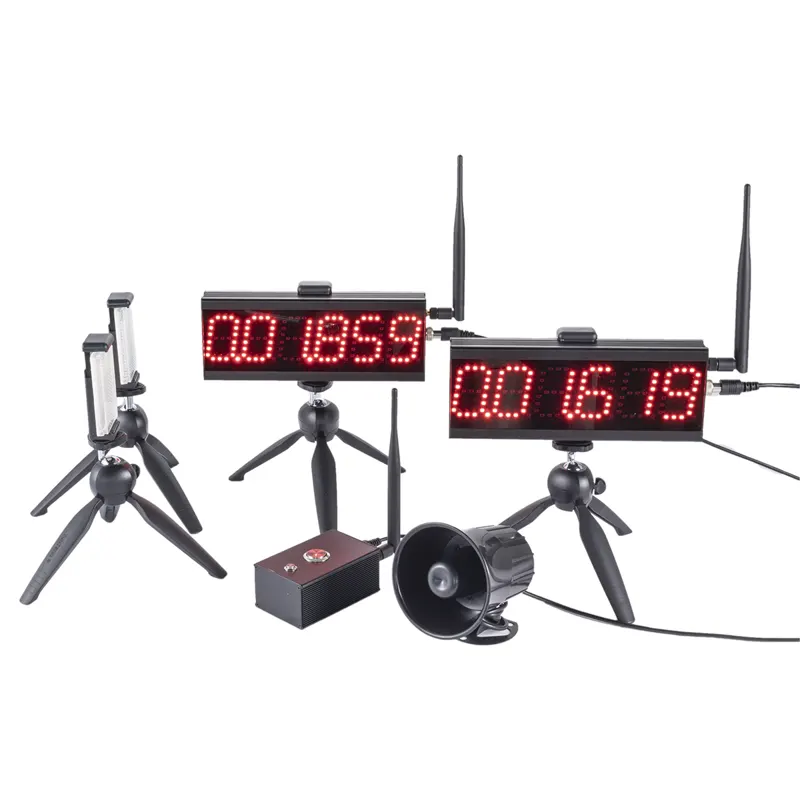
For a dual-track wireless starting point, review the S-003 product page. For multi-point sprint splits, compare the S-007 multi-point system. Confirm compatibility, package contents, and current specifications on the product page.
Best choice: pick the system whose trigger rule, alignment routine, and result review process match your protocol. “Photocell” or “laser” is only the beginning of that comparison.