
The choice is about workflow, not product size
A portable timing kit and a configured venue system can both measure a sporting event. The difference is the operating environment around the timing task. Portable equipment is chosen for movement, quick setup and repeat use in different places. A configured system is chosen when the layout, timing points, result visibility or handover between staff needs to be planned before purchase.
Choose portable when the location changes
Portable timing kits fit coaches, schools, clubs and mobile testing teams that work across fields, tracks and training locations. The best portable workflow is one the operator can set up, check, pack and repeat without rebuilding a venue installation.
| Portable timing kit | Best fit |
|---|---|
| Location | Changes between sessions |
| Test plan | Simple, repeatable start-to-finish or basic training tasks |
| Team | One coach or a small group can operate it |
| Priority | Transport, speed of setup and practical storage |
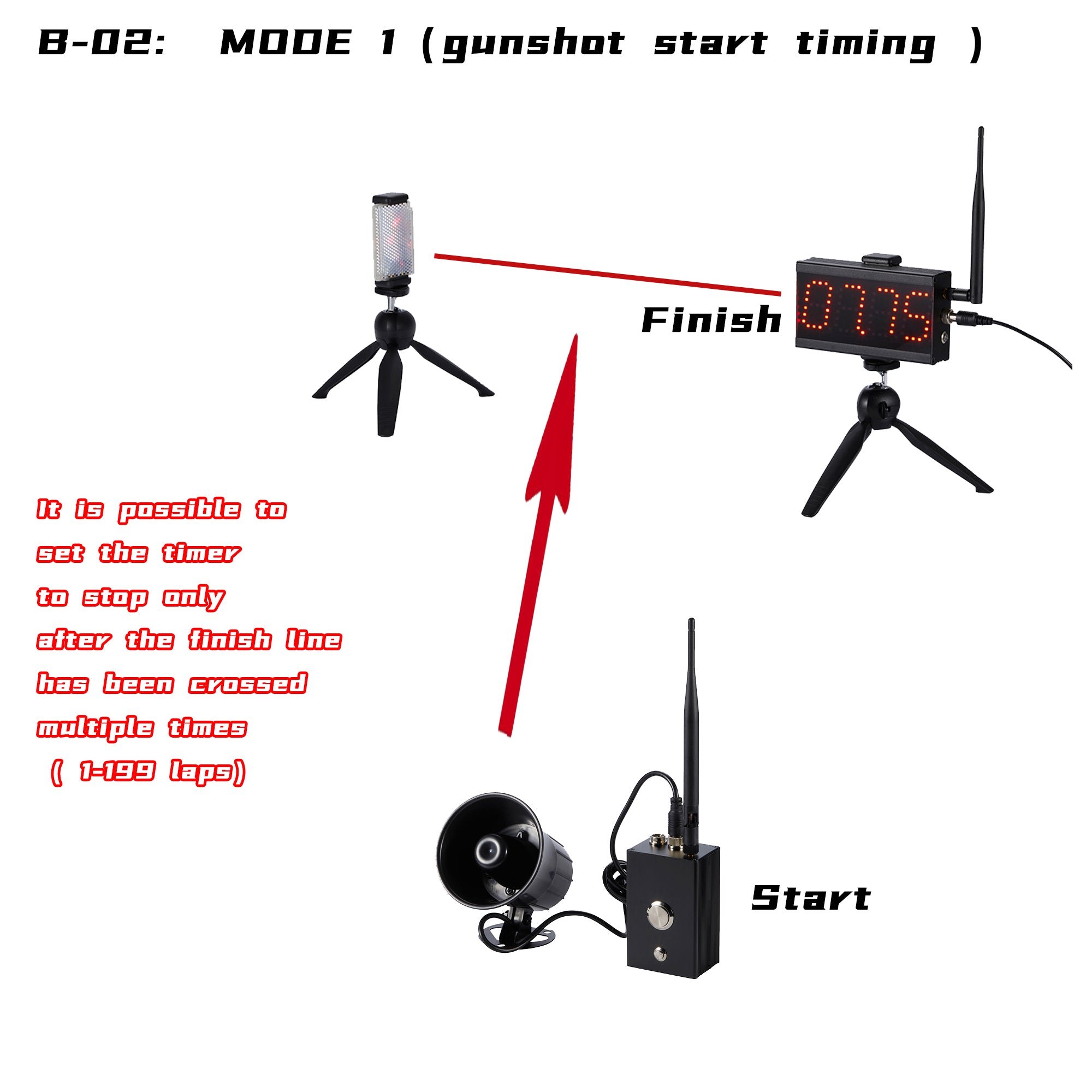
A portable route may start with B-01 or B-02, depending on the required training workflow. Confirm the exact model, mode and package before ordering rather than assuming all portable kits include the same components.
Choose configured when the layout matters
A configured system becomes the better path when a project involves multiple timing locations, a defined venue route, a visible result display, several staff members, a bulk purchase or a requirement that may grow over time. At that point, the question is no longer only “which timer?” but “how should the whole result workflow operate?”
| Configured venue system | Best fit |
|---|---|
| Location | Regular training venue, event route or planned installation |
| Test plan | Several timing points, sections or a controlled route |
| Team | Different operators need a clear procedure |
| Priority | Layout confirmation, future expansion and result workflow |
For this kind of project, S-400 is a configurable product path to review. The final sensor package, display requirements and operating arrangement should be confirmed against the planned venue, rather than selected from a generic gate count alone.
Compare the daily operating routine
Ask who arrives first, who places the timing points, who starts the test, who sees the result and who packs the equipment away. A portable kit simplifies the routine when one person owns most of those steps. A configured system helps when the routine must be understood by a team and remain stable across regular sessions or events.
When an LED display changes the decision
A display is often the turning point between a simple training setup and a planned venue workflow. If athletes, spectators or staff must read results at a distance, define where the display sits, who can see it, the available power and its timing-system compatibility. Read the LED display guide before including it in the order.
Information to prepare for a configured recommendation
- Sport, route or test type
- Distances and every timing point to be measured
- Number of lanes, participants or simultaneous routes
- Whether the equipment moves or remains at one venue
- Result-display, power, country, quantity and delivery requirements
Practical rule
If the test can be described as a simple mobile session with a clear start and finish, a portable kit may be enough. If you need a layout drawing, several timing points, a display, shared operation or room to expand, request a configured recommendation before ordering.
Frequently asked questions
Can a portable kit be used at a regular venue?
Yes. The decision depends on the tests and operating workflow, not on whether the location has a permanent address.
Does a configured system mean a permanent installation?
Not necessarily. It means the timing package is planned around a more specific layout and requirement. Confirm the deployment method for the selected model.
What should I send for a recommendation?
Send the sport, layout, distances, timing points, display need, country and quantity so the package can be checked before ordering.