01TIMER.COM / Timing system guides / Comparison
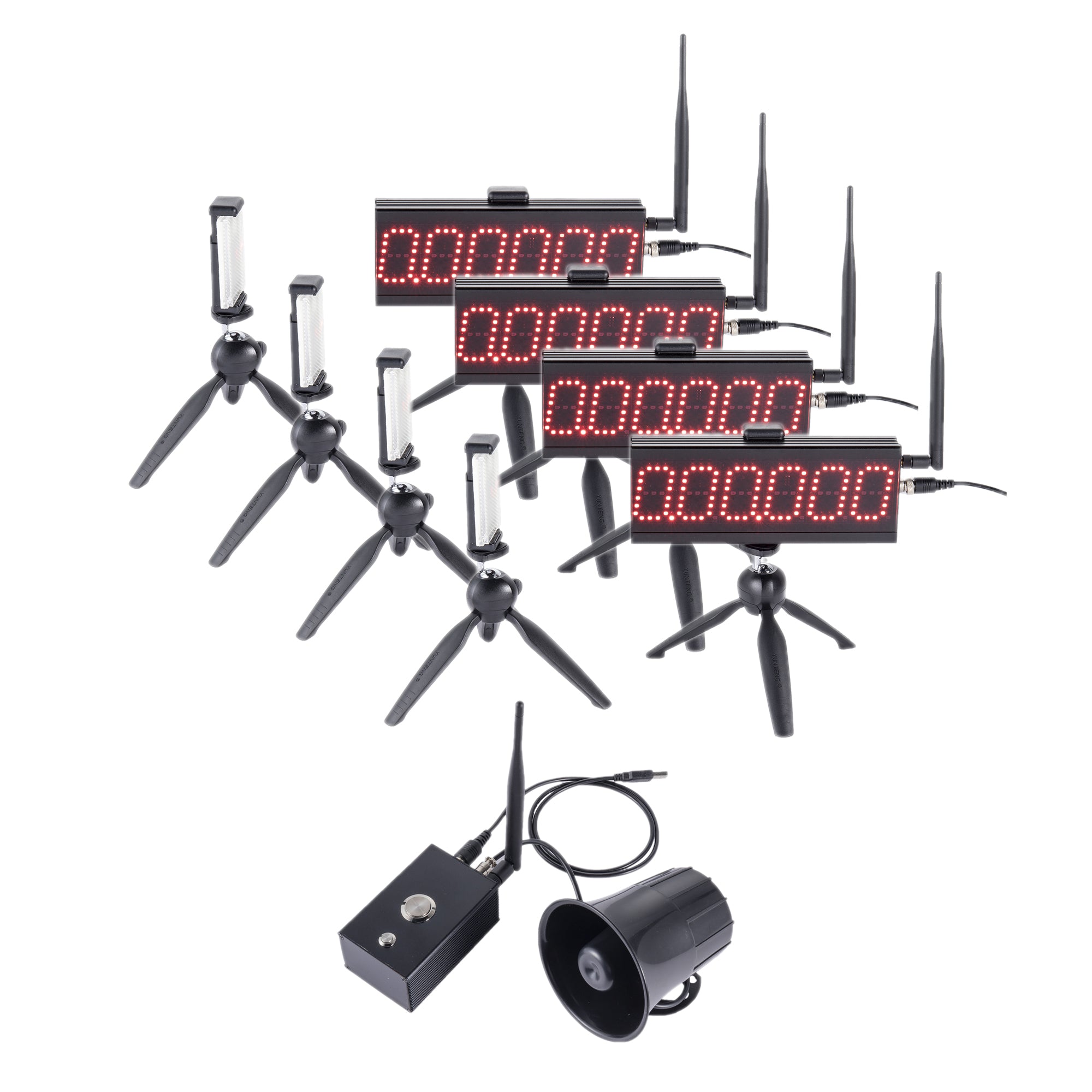
Wireless vs Wired Timing Systems: Which Fits Your Track?
The choice between wireless and wired timing is usually a course-layout decision. Both can produce useful results. The better option is the one your team can place, operate, and repeat consistently during a real session.
The short answer
Wireless timing is often easier when timing points are spread across a field, track, or rally course and the setup needs to move between sessions. Wired timing can make sense when the equipment stays in a fixed venue, cable runs are protected, and a permanent installation is worth the setup work.
Before comparing prices, write down the distance between timing points, how often the layout changes, whether you need splits or laps, and who will operate the system. Those four details usually narrow the decision faster than a feature list.
Wireless and wired systems compared
| Decision area | Wireless timing | Wired timing |
|---|---|---|
| Course layout | Useful when start, split, and finish points are separated or move regularly. | Practical when a venue has stable cable routes and fixed timing points. |
| Setup time | Less cable routing at each session, but wireless units still need alignment and a connectivity check. | More installation work at the beginning, with a familiar repeatable layout afterward. |
| Portability | Well suited to schools, clubs, testing days, and temporary courses. | Better suited to a dedicated track or controlled indoor space. |
| Maintenance | Requires battery planning, charging, and a check of the wireless link. | Requires cable inspection, protected connectors, and storage that avoids damage. |
| Expansion | Can be convenient when adding a checkpoint, lane, or remote display, subject to the model’s published limits. | Expansion depends on available ports, cable length, and the installed layout. |
When wireless timing is the better fit
1. Your timing points move
Coaches may change a sprint distance, move a shuttle-run line, or use the same kit at several venues. A wireless system reduces the amount of cable that must be measured, protected, and packed for each changeover. You still need a placement routine, but the routine is usually easier to adapt.
2. The course is spread out
Longer layouts and outdoor fields can make cable routing a safety and logistics problem. Wireless products in the 01TIMER solutions overview are designed around different timing formats, including sprint, segment, multi-point, multi-lap, and long-distance use. Check the individual model page for its stated operating conditions rather than assuming every wireless product has the same range.
3. One team serves several groups
A school, performance center, or club may run different tests on the same day. Portability can matter more than a permanent installation when the people, lanes, and session format change often. A clear packing list and spare batteries become part of the operating process.
When wired timing can still make sense
1. The venue is permanent
If timing points stay in place and cable routes can be secured, a wired setup may be straightforward for staff to operate. The initial installation deserves careful planning because a poorly protected cable can create downtime or a trip hazard.
2. Power and storage are already organized
A fixed venue may already have protected power, a timing desk, and equipment storage. In that environment, the daily convenience of charging and pairing wireless units may not outweigh the benefits of the existing wired workflow.
3. Your process is built around a known layout
Some teams value a setup that looks the same every session. If operators know the cable paths, labels, and connection checks, consistency can be a real advantage. Document the layout and test every channel before athletes arrive.
Do not overlook the result workflow
Timing hardware is only one part of the session. Decide how results will be identified, reviewed, and shared. A sprint test may need one final time per run. A shuttle run may need a repeatable start and finish process. A multi-lap session may need lap order and split review. Segment and multi-point systems should be evaluated by the result workflow they support, not only by the number of sensors.
For background, see Understanding Wireless Electronic Timing Systems from Scratch. For a shuttle-specific process, read How to Time a Shuttle Run Accurately.
A practical checklist before you order
Record the longest distance between timing points, the number of lanes or checkpoints, the number of attempts in a normal session, indoor or outdoor conditions, available power, and the country of delivery. Then ask the supplier to confirm model compatibility, package contents, battery expectations, replacement parts, shipping, and setup support.
01TIMER provides setup support, replacement parts, and a request-a-quote page. Use those pages to confirm details that are specific to your chosen model and destination.
Keep the comparison honest: wireless does not remove the need for alignment, power checks, or a repeatable operating procedure. Wired does not automatically mean more accurate. The useful system is the one your team can set up correctly and use the same way every time.