01TIMER.COM / Timing system guides / Race timing
How to Plan a Multi-Lap Timing Session
A multi-lap event produces more than one time for each competitor. Map the loop, name every timing event, and test the result flow before a real race creates a queue at the finish.
Separate the start, lap, and finish events
Start by writing the event sequence in plain language. A typical plan has a start, one or more lap passages, and a final finish. Some courses use the same physical point for the start and finish; others use different points. Either approach can work when the result rule is explicit.
| Event | Question to answer | Record to retain |
|---|---|---|
| Start | What begins the competitor's official time? | Competitor ID, start event, and any scheduled start detail. |
| Lap passage | What physical crossing counts as lap N? | Competitor ID, lap number, timestamp, and validity status. |
| Finish | Which crossing closes the result? | Final timestamp, lap count, result status, and review note. |
| Exception | Who reviews a missing or duplicate trigger? | Source record, decision, operator, and correction history. |
Do not let a display label stand in for the rule. "Lap 3" is useful only when the crew knows which crossing generated it and what happens if that crossing is recorded twice.
Draw the course and the operating zones
Mark the start and finish approach, the lap point, the direction of travel, and the safe space after each timing zone. Walk the loop with the operator who will watch the equipment. Check sightlines, surface changes, cables or power, rider or vehicle clearance, and places where competitors may bunch together.
If the start and finish share a line, mark the direction and the expected passage order. If the lap point is separate, give it a short name that appears on the crew sheet and in the result file. Simple labels reduce mistakes when several timing points are active.
Configure a lap protocol before the first test
Write the expected lap count, start method, finish rule, and invalid-run policy. Decide whether a practice pass is ignored, how a competitor is identified, and who can approve a correction. Keep the raw timing record even when the published result is later cleaned up.
The rally checkpoint workflow follows the same principle: each timing point needs an owner, a purpose, and a review path. A circuit race has different rules, but the need for a traceable decision is the same.
Test the complete loop, not just a single trigger
Run the route with a controlled test subject or an approved vehicle. Confirm that the start is captured, each lap increments once, the final passage closes the result, and the right competitor remains attached to every event. Repeat the test after changing gate placement, power, communications, or course direction.
Check the edge cases deliberately. Test a slow passage, a close following passage, a missed trigger, and an extra crossing that should not count. Write down the expected handling before the event so the operator is not forced to invent a decision while the course is busy.
Review results before showing them
A live screen can help crews and spectators, but the source record should remain available for review. Mark provisional results when the event rules require an official check. Keep the competitor ID, lap count, raw timestamps, corrections, and approval status together.
After the session, compare the number of completed laps with the expected count. Look for duplicate IDs, missing passages, impossible lap order, and edits with no note. Export or archive the source record according to the event's privacy and retention rules.
Match the system to the map
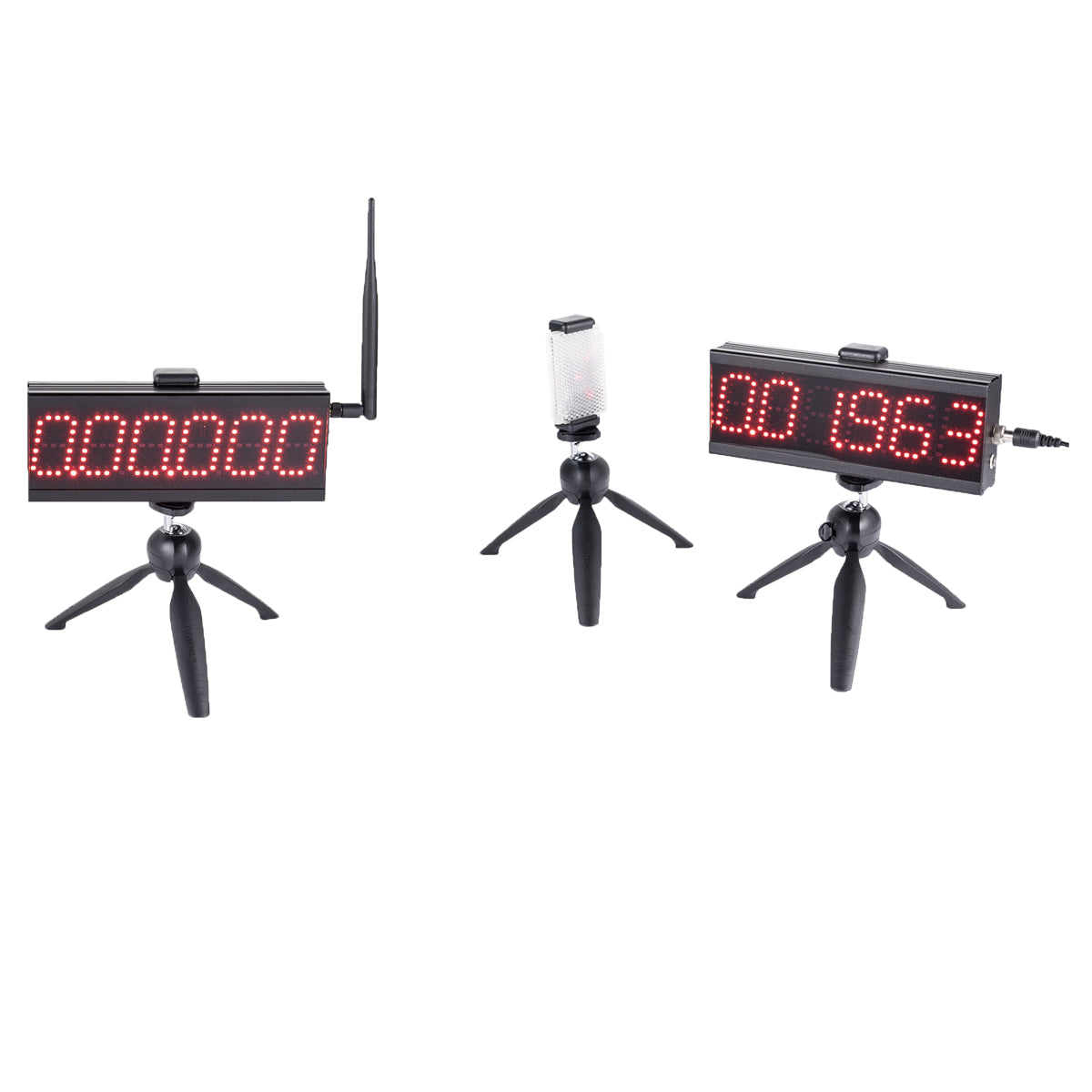
For published product details, review the S-005 Multi-Lap Wireless Timing System page. The timing use-case overview can help compare lap timing with start-to-finish and multi-point work. Confirm the exact operating mode, included parts, and support path before ordering.
Count every passage: a multi-lap result is dependable when the course map, event labels, and exception process agree with the timing record.