01TIMER.COM / Timing system guides / Shuttle result review
How to Compare Shuttle Run Times Across Training Sessions
A faster number does not explain what changed. To compare shuttle run times, first confirm that the athlete completed the same course with the same turn rule and timing method. Then review the test-day context and the full set of valid attempts.
Confirm that the protocol is the same
Start with the protocol name, but do not stop there. Two sessions can both be called a shuttle test while using different distances, numbers of turns, start postures or line-touch requirements. Those results belong in separate series.
Keep a short protocol record with the data. It should state the measured distance, course geometry, start instruction, turn rule, finish rule and number of trials. Link to the rule source when a school, federation or research protocol governs the test.
The shuttle run timing setup guide explains the difference between same-point return runs, 5-10-5 tests, 4 x 10 m protocols and multi-point layouts. Use that page for course setup; this guide begins after the session has produced results.
Keep the timing method in the result
Hand timing includes the operator's response to the start and finish. Electronic timing records a sensor event. Both methods can be used in an appropriate context, but their values should not be merged as though the method never changed.
A 2023 study compared trained and untrained raters with photoelectric timing for a 4 x 10 m shuttle run in adults. Its conclusion concerns that study population and protocol. Read the PubMed abstract on 4 x 10 m time measurement before applying the finding elsewhere.
When a program moves from a stopwatch to a shuttle run timer, begin a new comparison series or mark the transition clearly. Keep the old records, because they still describe earlier sessions. They simply use a different measurement method.
Review every valid attempt, not only the fastest
A single best time is easy to communicate, but it can hide the shape of the session. Store each valid attempt and the recovery period used by the protocol. Mark false triggers, slips, missed lines and reruns separately.
Decide before testing whether the reported value will be the best time, an average or another protocol-defined result. Changing that decision after seeing the numbers creates a comparison problem. The raw attempts should remain available whichever summary is used.
| Field | Why it belongs in the comparison | Example entry |
|---|---|---|
| Protocol | Separates courses and turn rules | Program-defined same-point shuttle |
| Timing method | Prevents stopwatch and sensor times from being mixed | Electronic sensor trigger |
| Attempt status | Keeps invalid runs out of the summary without deleting them | Valid, missed line, false trigger |
| Surface and footwear | Records changes that affect traction and turning | Indoor court, training shoes |
| Session context | Explains changes in preparation or fatigue | After standard warm-up |
Check the course and athlete context
Surface, footwear, lane width and turn-line condition affect how an athlete approaches the change of direction. Weather may matter outdoors. Record these details when they change, and avoid a direct comparison when the difference is large enough to alter the task.
Athlete context also belongs in the review. Note whether the test followed the same warm-up and occurred at a similar point in the training session. An athlete tested fresh and an athlete tested after hard running did not complete the same practical task, even if the cones stayed in place.
These notes do not need to become a long report. A few fixed fields are easier to use than a blank comments box. The goal is to explain why two values can or cannot share the same trend line.
Separate device resolution from performance change
A display with fine decimal resolution does not prove that every small difference reflects the athlete. Test variability also comes from body position at the beam, the turn, surface contact and the protocol around the timer.
Use the program's own repeated data to learn how stable the test is with the same athletes and setup. A coach can then judge a change against normal session variation instead of treating the final decimal as decisive. Research conclusions about reliability only apply to the tested equipment, population and protocol.
For data handling, the timing data and CSV workflow shows how to preserve athlete IDs, raw results and correction notes across exports.
Use one review sequence after every session
- Confirm the protocol ID and timing method for the session.
- Check invalid-attempt notes before calculating a summary result.
- Compare the surface, turn rule, start instruction and athlete preparation with the earlier session.
- Review all valid attempts, then apply the reporting rule chosen before testing.
- Keep the raw values and write one short note for any protocol change.
The same sequence helps when several staff members handle the results. It removes the need to remember which exceptions mattered after the session.
Connect the result workflow to the equipment
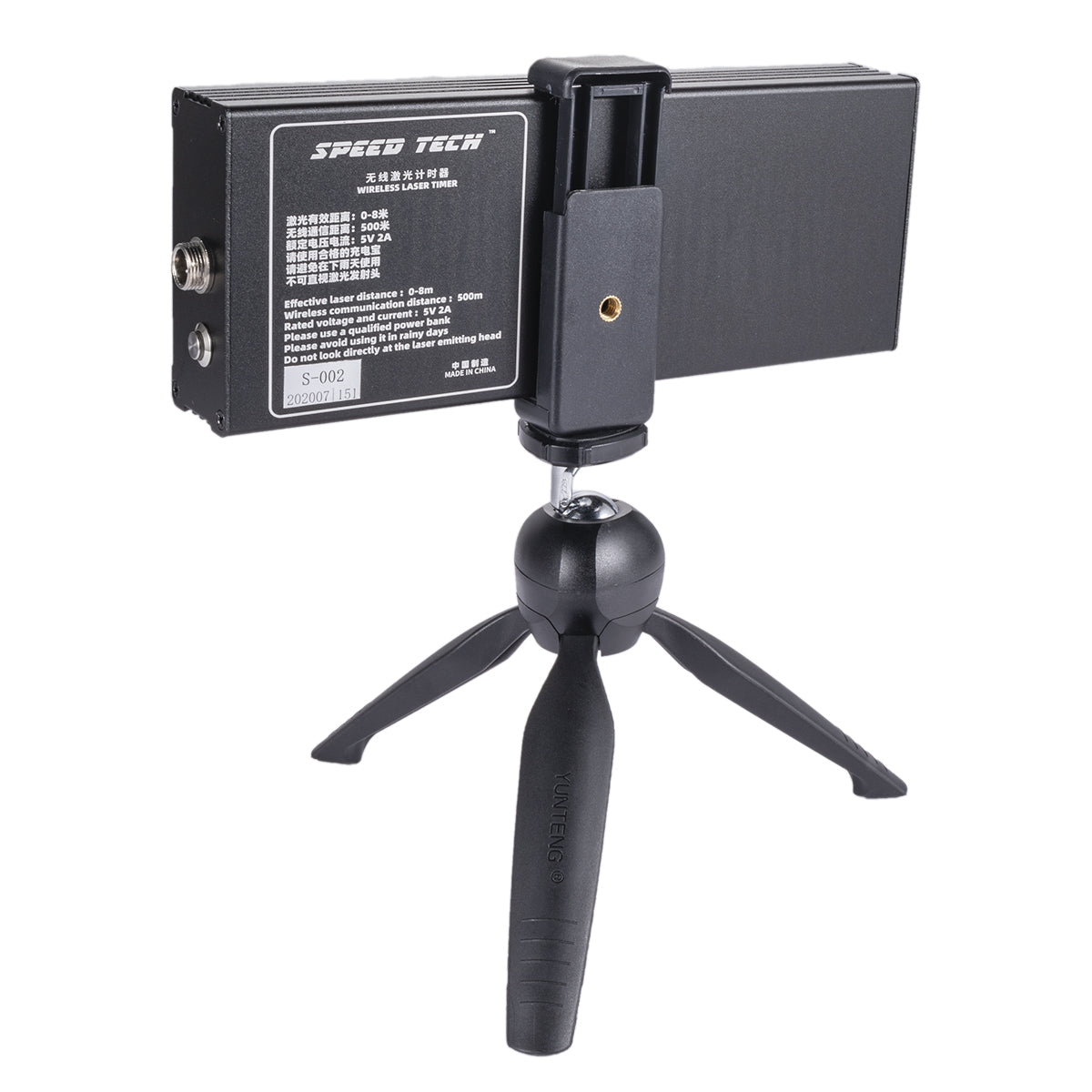
The S-002 shuttle run timing system is the site's product path for same-point return runs, agility testing and school fitness use. Its current page describes a sensor-triggered, turn-back timing workflow. The S-002 session guide covers equipment placement and checks.
Confirm the current product page, course conditions and package before ordering. The result workflow in this article can also be used with another device, as long as the timing method and protocol are recorded honestly.
Review rule: compare the protocol and context before comparing the number.
Questions about comparing shuttle run results
Can results from different shuttle protocols be compared?
Do not treat them as a direct comparison when distance, geometry, start or turn rules differ. Keep separate series.
Can stopwatch and electronic times be combined?
Keep them in separate columns or series. A method change can alter the recorded value without an athlete performance change.
Does a faster time always show improvement?
Check the protocol, timing method, surface, athlete condition and invalid-attempt notes before making that conclusion.