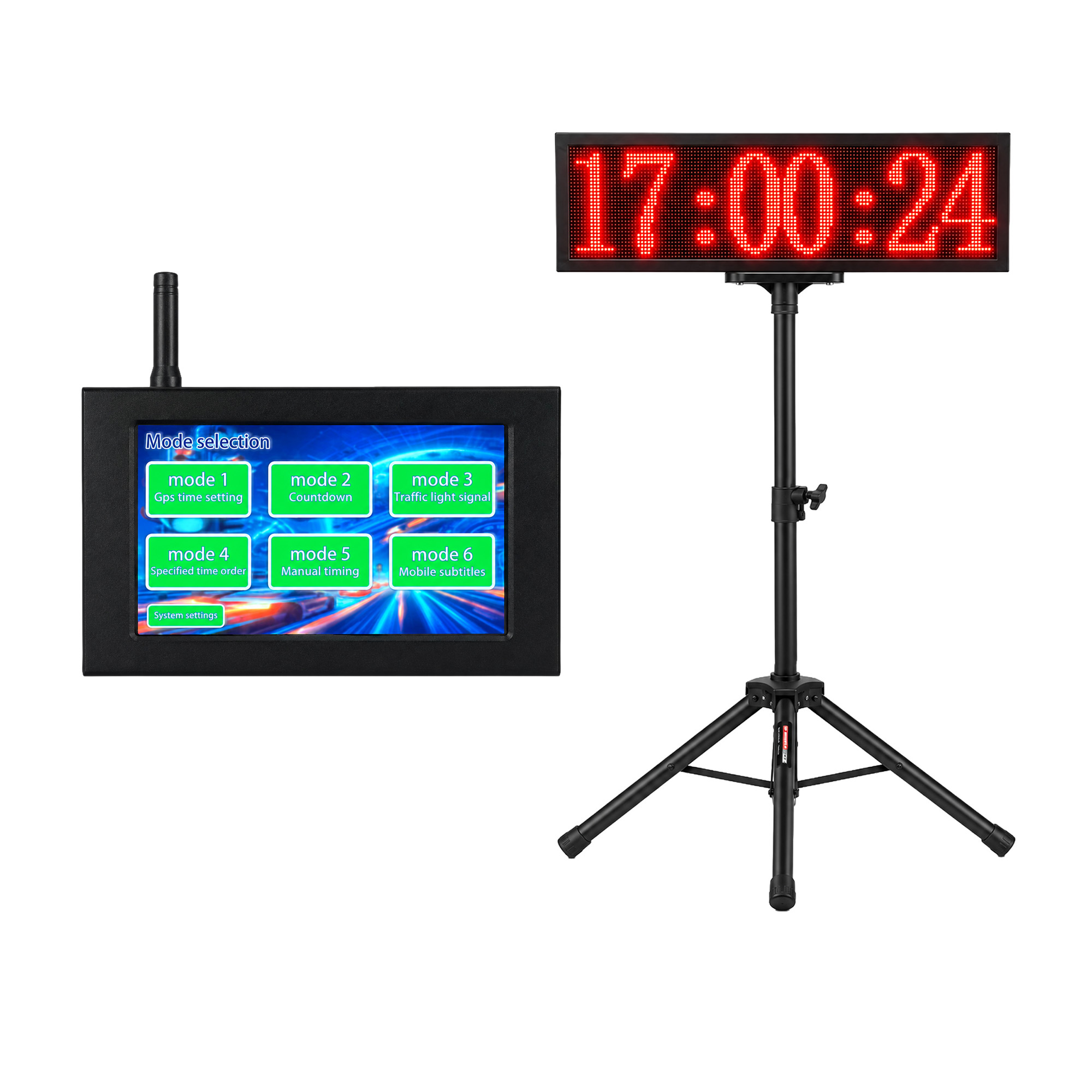
ML-01 Event Results Display Zone Plan
A large result display works best when its location is planned as part of event operations. Before placing the ML-01, map who needs to read it, where they will stand and how the timing team will control what appears.
The ML-01 product page describes a large LED result display for venues, events, schools and visible result areas. It lists a display module with mounting or stand accessories and power support by package. It does not establish compatibility with every timing console or specify a universal viewing distance, brightness or weather rating, so confirm those details for the actual venue and package.
Mark three zones on the venue drawing
Start with a simple plan rather than picking a wall or fence at random. Mark the timing desk, the display location and the main audience or athlete waiting area. Add the finish line, public paths, marshal posts and any temporary barriers that could obstruct the view. The purpose is to see whether people can read results without crossing an active course or crowding the operator's work area.
| Zone | Map detail | Operational check |
|---|---|---|
| Timing desk | Operator position and data handoff point | Who sends, checks and authorizes a result |
| Display point | Stand or mounting surface, orientation and access | Package mounting and power requirements |
| Audience area | Likely viewing positions and movement paths | Clear sightline without blocking exits or officials |
| Restricted area | Course, cables and staff-only routes | Keep spectators away from equipment and hazards |
Walk the map from the likely reading positions. Check for fencing, tents, parked vehicles, banners and low sun angles that may hide the display. A display visible from the timing desk may still be unreadable to athletes waiting near the call-up area. If the event uses separate spectator and participant zones, decide whether one display serves both or whether staff need a different way to communicate results.
Agree what a displayed time means
Before the event, define whether the screen will show a live reading, a provisional result or a result that has passed the organizer's review. The person operating the display should not decide classification. Instead, agree on an authorized source and a simple handoff: timing records the event, the results official checks the entry and status, then the approved value is sent to the display operator.
For close finishes or manual corrections, keep the raw timing record and any review reference. Do not overwrite an earlier value without documenting who authorized the change and when. The provisional race-time display protocol describes how status labels can be kept clear, while the timing data export guide covers stable participant identifiers.
Confirm the data connection before choosing the stand
Check how the selected timing system would send a result to the ML-01. Ask for the exact interface, supported data, accessories and operating sequence. The product page does not establish plug-and-play compatibility with all brands or models. If the display is part of a configured package, ask the supplier to confirm both devices together and specify what is included in writing.
Then plan power and cable routing. Keep leads outside walking lanes or protect them according to the venue's safety plan. If the selected package uses a wireless method, confirm its site requirements and test at the planned positions rather than assuming the connection will work through walls or across the entire venue.
Run a quiet-site rehearsal
Set the display at its planned location before participants arrive. Send a sample result, compare it with the timing desk and confirm the right competitor, event and status appear. Ask someone who did not set up the system to read it from each audience zone. If the display needs repositioning, update the map and repeat the test.
During the event, assign one person to keep the display area clear and another to handle result questions. The operator should have an agreed method for pausing updates when a review is open. At close, reconcile the last displayed result with the official result list so an old provisional value is not left visible after the event.
ML-01 display planning questions
Does the ML-01 decide whether a displayed result is official?
No. An appointed event official decides result status under the event rules. The display should reflect the status supplied by the approved timing and results workflow.
Can ML-01 connect to every timing system?
Do not assume compatibility. Confirm the timing system model, interface, data format, cable or wireless method, and included accessories with the supplier.
Where should a large event display be placed?
Map the intended audience sightlines and staff access, then confirm mounting, power and environmental requirements for the selected package and venue.
Related reading: ML-01 and X-001 PLUS package fit, LED display visibility setup, ML-01 specifications and package options, and request a configured system quote.