01TIMER.COM / Timing system guides / LED display visibility
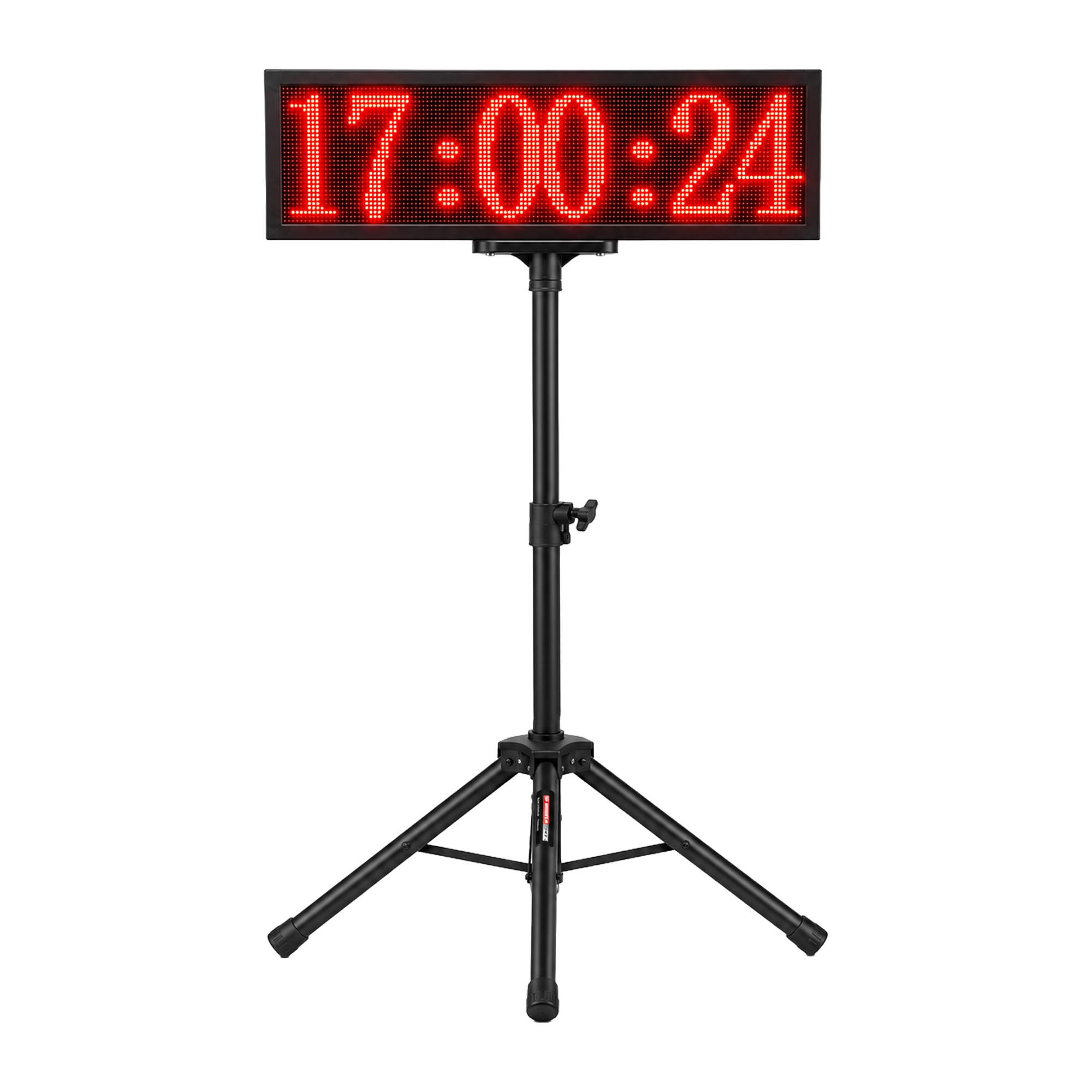
Timing LED Display Placement: A Practical Event Guide
Timing LED display placement starts with the people who need the result. The board has to face the right readers, sit outside the traffic line, and remain visible as light and crowd conditions change. This guide turns the job into a short site walk that a coach, event director or setup crew can repeat.
Start with the viewing groups
List who needs the result in the first minute after a passage. An athlete may need a quick confirmation at the finish. A coach may stand beside the team area. Spectators may view the board from a different angle. Officials may need the control position rather than the public display. One board can serve several groups, but only if its position is chosen around the actual flow.
The 01TIMER LED Display product page describes a visible result display for venues, tracks and events, with rally events, school events, clubs and public timing displays listed as suitable uses. It also says position should be chosen by venue visibility and power access. Those two checks should be on the site plan before equipment arrives.
Walk the sightlines
Stand at the finish, then move to the coach line, spectator area and operator position. Mark where the display becomes hard to read. Repeat the walk from both sides of the track if people approach from different directions. A board that is clear at ten metres may disappear behind a barrier, tent or group of athletes at the distance that matters.
Do the walk at the time of day when the event will run. Morning shade and afternoon glare can produce different decisions. If the venue uses a covered structure, check whether the display is shaded while the finish line is not. The goal is legibility, not maximum brightness.
Keep the display out of the result path
Athletes need a clear run through and beyond the finish. Place stands outside the running lane and outside the route used by officials carrying equipment. Leave room for a person to turn without brushing a tripod. If the event uses a rally checkpoint or a school queue, separate the display viewing area from the next competitor's entry route.
The timing-gate alignment guide is about the beam, but its working principle applies here too: stable equipment and a defined crossing reduce avoidable changes. A visible result is not worth a blocked lane or a stand that moves after a contact.
Plan power and communication together
Good timing LED display placement also depends on a power route that stays clear of the audience.
Draw the power route on the same sketch as the sightline. Note the outlet, cable length, charging point and any place where a cable could cross foot traffic. The current LED display page says power accessories and communication conditions should be confirmed by package and site. Do not infer a cable or wireless arrangement from a different model.
| Plan field | What to write | Why it prevents rework |
|---|---|---|
| Audience | Athletes, coaches, spectators or officials | Sets the primary facing direction |
| Viewing points | Finish, team area, stand or control table | Exposes blind spots before setup |
| Power | Outlet, route and charging plan | Keeps cables out of movement areas |
| Control | Operator position and access path | Separates board viewing from system operation |
| Weather | Sun, rain, wind or indoor lighting | Supports a realistic visibility check |
Test the number, not just the hardware
Run one controlled timing event and ask a person at each viewing point to read the result aloud. Test a short value, a long value and the transition between results if the event uses different formats. Check whether a competitor can see the board without stepping into the finish lane.
The rally checkpoint guide and school testing template show why the same number can be used by very different audiences. Write the audience and display position into the event plan so a result remains understandable when the venue changes.
Choose the display role before choosing the package
Some events need one public result board. Others need a display at the finish and a separate operator screen. A multi-lap session may need the current lap and total to be understood differently. A finish-review process may keep the official evidence at the control table while the display simply keeps the crowd informed.
For a product fit check, compare the standard LED Display page with the ML-01 kit and confirm compatibility, mounting, power and quantity for the selected timing system. The setup support page is the right route for a package question that the product page does not settle.
Placement rule: place the display for the reader's path, then protect the athlete's path and the operator's access.
Questions about timing LED display placement
Should the display face the finish line or the spectators?
Use the primary audience as the first constraint, then verify the finish-line sightline. If one position cannot serve both, document which group gets immediate visibility and consider a configured package.
Can the display stand beside a timing gate?
It can when the stand stays outside the running and equipment paths and the timing system's package supports that arrangement. Confirm the site plan and model compatibility first.
Is a display photo enough for an official result?
No. Keep the timing record and review notes. A photo can support communication, but it does not identify every event condition.