01TIMER.COM / Timing system guides / Change of direction
T-Test Agility Timing: Setup and Recording Guide
The T-Test is a course-management problem before it is a timing problem. Athletes must understand the route, staff must place the markers consistently, and the finish rule must be fixed before the first scored attempt.
Define the T-Test your group will run
Different programs may use different dimensions, movement instructions, or touch requirements. That is not a reason to avoid the test. It is a reason to document the version you use. Put the measurements, marker positions, start posture, movement sequence, and finish action on one setup sheet.
Do not borrow reference times from another protocol unless the course and instructions match. A small change in marker spacing or how an athlete touches a line can change the task. Your most reliable comparison is the same athlete completing the same documented test over time.
Set out the course before bringing athletes in
Measure each distance rather than placing cones by eye. Use stable markers that remain visible during lateral and backward movement. Walk the route from the athlete's starting position to check that there is enough safe space beyond the finish for deceleration.
| Setup item | What to define | Why it belongs in the record |
|---|---|---|
| Course dimensions | Every marked distance and the location of each cone or line. | It makes later setup repeatable. |
| Movement sequence | Forward, lateral, and backward portions; hand-touch or line-touch rules where used. | It keeps staff instructions consistent. |
| Start and finish | Start posture, start event, finish line, and what ends the timing result. | It prevents results from being recorded under different rules. |
| Attempt policy | Practice attempts, scored attempts, rest, and handling of an invalid run. | It avoids changing the process for individual athletes. |
Place timing gates around the actual start and finish rule
Electronic timing gates are most useful when they are placed after the course design is final. First decide where the athlete becomes timed and what movement completes the run. Then position and align the gates for that decision. Run several controlled passes using the same route athletes will take.
Watch for common field errors: a finish gate placed where athletes decelerate early, a cone that encourages a wider turn for one direction, or equipment that gets moved after a near miss. The gate alignment guide covers the equipment check; the course diagram remains your responsibility.
Teach the route, then begin scored attempts
A short walkthrough and an unscored practice attempt reduce accidental wrong turns. Keep the briefing the same for every athlete. Once timed attempts begin, do not add coaching cues that alter the movement standard for one person but not another.
When a run is invalid under your rules, write the reason alongside the result. Examples might include a missed marker, an incorrect route, or an equipment interruption. The point is not to create a long list of exclusions. It is to keep the results interpretable.
Record the details that explain the number
Store the time with the athlete identifier, date, course version, surface, footwear, attempt number, and any relevant note. That record turns an isolated result into something a coach can use. For a separate, shorter directional-change protocol, see the 5-10-5 agility timing guide.
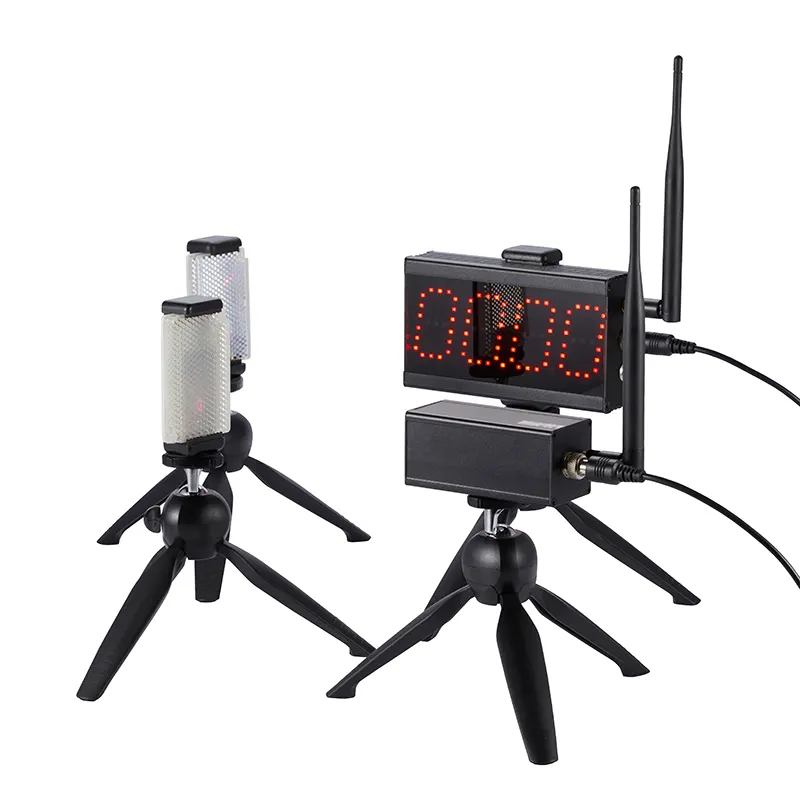
For a simple field setup, the S-002 shuttle-run timing system page is the source for published product information. Confirm a model's suitability and setup instructions on its current product page before purchase.
A fair T-Test is a stable T-Test: use the same route and timing rule first. Refining the equipment comes after the protocol is clear.