01TIMER.COM / Timing system guides / S-003 dual track
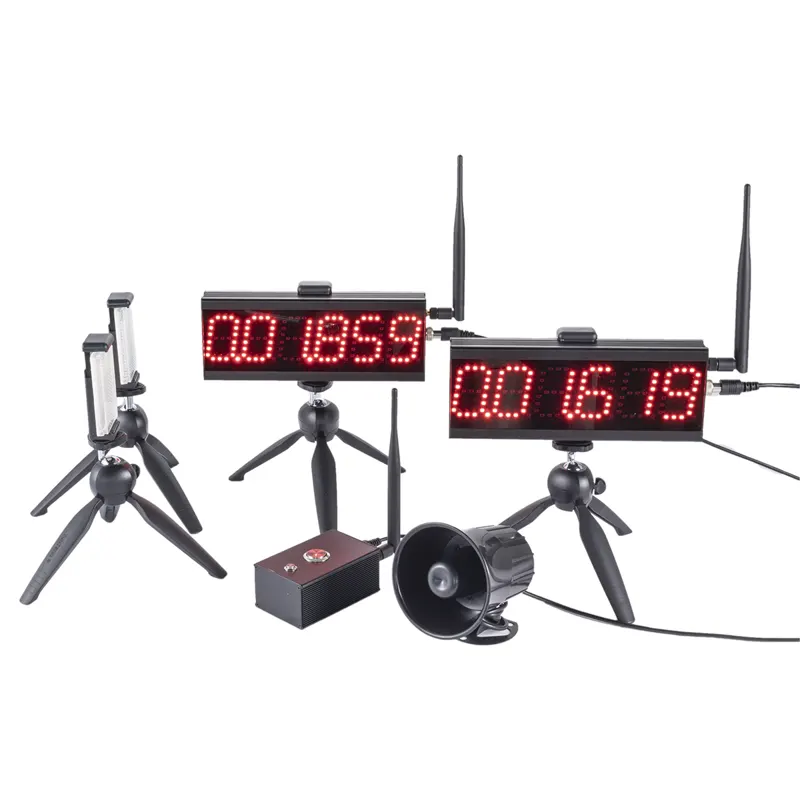
Running a Two-Lane Timing Session With the S-003
Two athletes can share one start command and still receive results that are hard to compare. The lane lengths, beam positions, start offsets and record labels all need to match. The S-003 provides the two-track format; the session protocol makes that format useful.
Use two lanes for the right reason
The S-003 product page describes the model as a dual-track competition timing system for two-lane sprint testing, race comparison sessions and club events. That makes it a practical fit when simultaneous runs are part of the test or when two testing channels can shorten a group session.
A dual-track setup does not automatically replace a multi-point layout. It answers a lane question: how should two parallel start-to-finish paths be timed and identified? Choose a split-timing model when intermediate segment data is the main requirement.
Build both lanes from the same reference
Measure each lane independently from its start line to its finish line. Do not assume painted markings or cone spacing are identical. Place corresponding sensors at the same longitudinal position and match the beam height. Keep stands, cables and operators beyond the athletes' run-out path.
Walk each lane alone, then walk both in the order the live session will use. Confirm that lane A produces a lane A result and lane B produces a lane B result. A timing number attached to the wrong runner is not a usable result.
Choose a lane-assignment rule
| Session goal | Lane approach | Record needed |
|---|---|---|
| Head-to-head practice | Keep the pairing and start command together. | Athlete, lane, opponent and trial |
| Individual benchmark | Use one assigned lane or a planned lane swap. | Lane for every recorded time |
| Large group rotation | Queue athletes in pairs with a visible order. | Heat number and two athlete IDs |
| Lane comparison check | Run the same controlled passage in both lanes. | Difference and corrective action |
If athletes swap lanes, decide whether the selected score is their best valid time, the mean of two trials or another rule. Write that choice into the protocol before the first scored run.
Control the start without creating confusion
Both athletes need the same start instruction. The operator should confirm names and lanes, check that the result display is ready, then use the agreed signal. If one athlete leaves early, apply the session's false-start rule to the whole heat or to that athlete as defined in advance.
Keep reaction time separate unless the chosen start method captures it. A gate-based elapsed time and a reaction measure are not interchangeable. See the start and reaction guide when the session needs both.
Check for lane bias
Surface, slope, wind exposure and a slightly displaced gate can favor one lane. Before formal testing, use controlled passages or a planned athlete crossover to look for a consistent difference. If the lanes cannot be made comparable, treat them as separate testing stations rather than direct competitors.
The same physical checks used for one lane apply twice. Review beam alignment and height, then document any adjustment by lane.
Store a result that survives the session
Each row should include athlete ID, heat, lane, distance, start rule, attempt, time and validity note. Pair order alone is not enough because an absence, rerun or lane swap can break the sequence. The CSV and athlete roster workflow offers a clean field structure for larger groups.
Before the first heat: verify both lane labels at the controller, not only at the track. That single check protects every result that follows.