01TIMER.COM / Timing system guides / Decision guide
A Practical Decision Tree for Solo Sprint Timing With S-009
You can time sprints alone without a full timing crew. The session still needs a stable test definition. This S-009 solo sprint timing decision guide reduces the setup to four choices: the question being tested, the start event, the finish crossing and the record kept afterward.
Decision 1: what should this time describe?
The S-009 product page presents the model as a sprint laser timer for one-person operation, short sprint training and athlete benchmarking. Write the chosen test name and distance before setting the equipment down.
Decision 2: which event starts the test?
The official page describes a one-button command that starts automatic timing with a built-in voice prompt and start-gun sound playback. Use the same command sequence for the entire result series. Record that the run used a command start.
Give the athlete one rehearsal to hear the sequence and learn when to move. The rehearsal belongs to setup, not to the scored attempts.
Decision 3: where should the finish event occur?
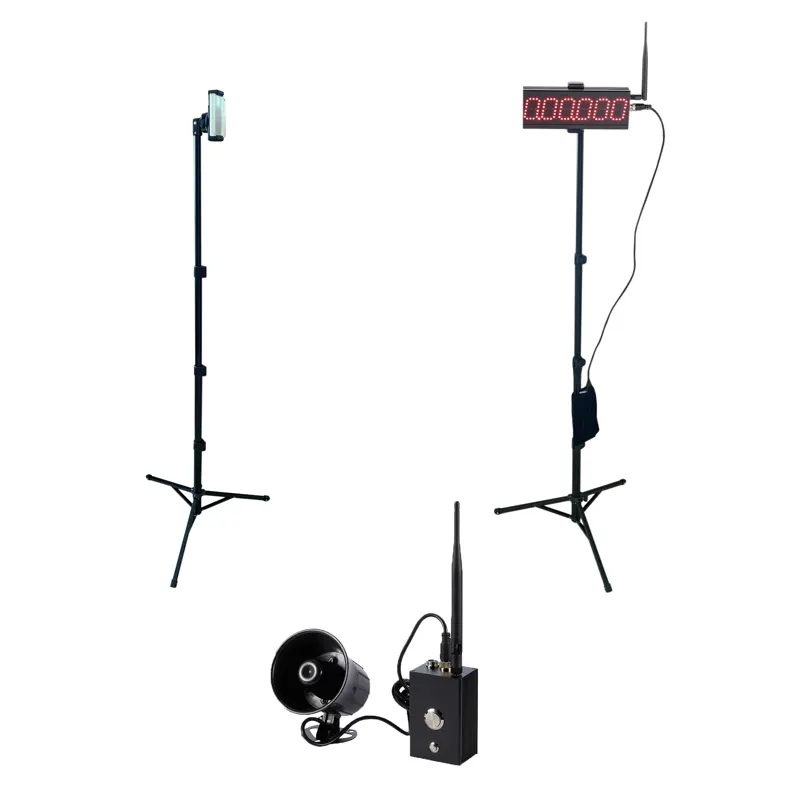
Measure the course to the finish line, then align the sensor and reflector with that line. The listed package includes one laser reflector and two tripods. Keep both supports outside the running lane and provide enough space for the athlete to continue beyond the finish.
Choose one beam height and document it. If a tripod moves, stop and rebuild the crossing before the next run. The alignment and beam-height guide explains why finish geometry affects repeatability.
Decision 4: what belongs in the result record?
| Field | Why it matters | Minimum entry |
|---|---|---|
| Test ID | Separates distances and start methods | Name, distance and start rule |
| Athlete | Keeps attempts attached to one person | Stable athlete ID |
| Attempt | Preserves the order of the session | Attempt number and time |
| Status | Explains excluded values | Valid or named exception |
| Context | Documents meaningful changes | Surface, weather or setup note |
Keep every valid attempt, even if the program reports only the fastest. The athlete testing data workflow shows how to retain raw results and session notes.
Run the decision tree once more before scoring
Stand at the start and read the four answers aloud: test, start, finish and record. Walk through the finish sensor, then complete one controlled run. Confirm that the command plays, the finish event stops the time and the result is visible where the athlete can read it.
The current page lists a 6-digit LED display in the package, along with a control box, cables, antennas, screen clip and equipment case. It also publishes timing accuracy up to 0.001 second and communication references for stated conditions. Check the current S-009 specifications rather than carrying those figures into another model or venue.
Stop conditions for a solo session
Pause after a missed trigger, moved stand, blocked lane or unclear result. A solo athlete has no second operator watching the equipment, so the safest response is to inspect the course and repeat the rehearsal. Do not edit an uncertain value into a plausible one.
Decision rule: when one of the four answers changes, start a new result series.
Questions about solo sprint timing
Can the S-009 play a start sound?
The product page states that its one-button command includes a voice prompt and start-gun sound playback.
Does the package include a visible result display?
The current package list includes a 6-digit high-brightness LED display. Confirm the supplied package before ordering.
Can solo times be compared across different distances?
Keep each distance and start rule in a separate test series. Compare results only when the protocol matches.