01TIMER.COM / Timing system guides / Track setup
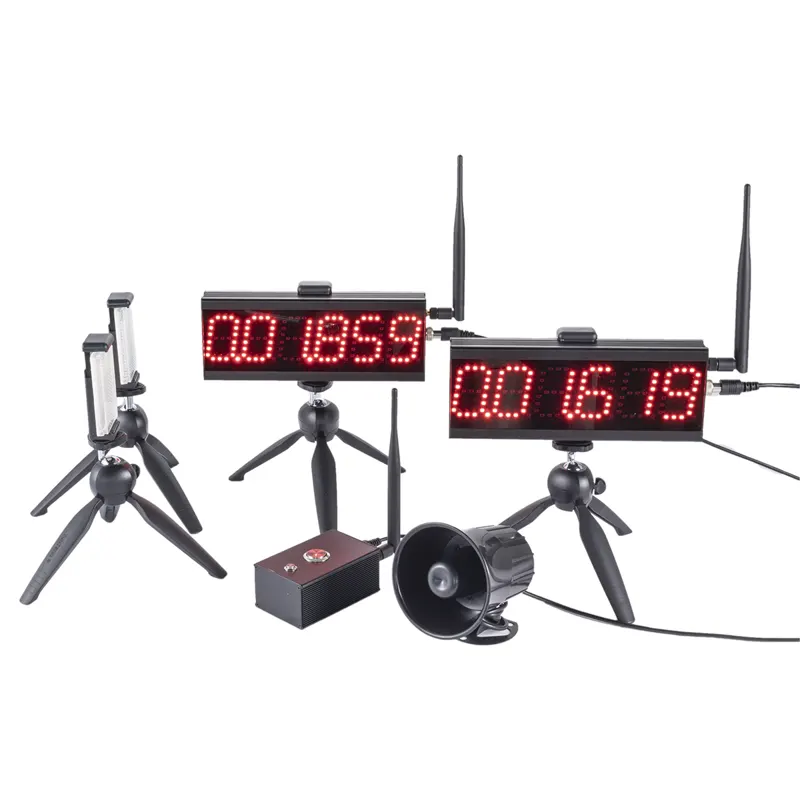
Track Timing Systems for Training Days and Club Meets
A track timing system has a different job in a coaching session than it has at a club meet. Training rewards quick resets and useful splits. A meet adds lane ownership, staff communication, result review and a backup plan. Start with the session, then choose the equipment layout.
Write the result requirement before placing equipment
Define the result that people need to see or store. A coach may want one final time, two acceleration splits or side-by-side times for paired athletes. A club meet may need a result for each lane, a visible display and a named person who approves corrections.
This decision controls the rest of the setup. Adding gates without a reason creates more alignment checks and more opportunities to attach a time to the wrong athlete. The wireless timing system selection guide separates start-to-finish, split, multi-lane and lap workflows before models are compared.
A training day favors repeatable stations
Training groups move quickly. The operator needs to identify the athlete, arm the timing mode, confirm a valid trigger and record the result before the next repetition. Put the display where the operator can read it without turning away from the lane, and keep waiting athletes outside every beam.
Mark sensor and reflector positions on the surface so the lane can be rebuilt the same way next week. Record beam height, test distance, start instruction and the rule used to select a reported result. The setup sheet matters as much as the number shown on the display.
For a single start-to-finish lane, the S-009 sprint laser timer is the site's short-sprint product path. Its current page lists voice-start operation, sensor triggering and an included LED display. Confirm the current package and operating conditions on that product page.
A club meet adds roles and exception handling
A club meet needs a small operating procedure before athletes arrive. Assign a starter, timing operator, lane recorder and results owner. One person can cover more than one role at a small event, but each decision still needs an owner. Staff should know who can call a rerun and how an invalid trigger is marked.
Run an empty-lane trigger test, then a controlled test across every active lane. Check that lane labels on the equipment, recording sheet and display use the same names. Keep a manual or video backup if the event rules or the consequences of a missed result justify it.
Formal competition timing is a separate category. The World Athletics Competition and Technical Rules describe official timing, photo-finish and staffing requirements. Check the governing rules for the event. A training laser timer should not be presented as certified competition equipment unless the relevant documentation says so.
Match the lane layout to the session
| Session | Result to capture | Practical layout | 01TIMER starting point |
|---|---|---|---|
| Training day | One athlete's final time | One controlled start and finish path | S-009 sprint timing |
| Paired training | Two lane results from the same session | Matched lane lengths and separate result ownership | S-003 dual-track system |
| Split session | Acceleration or segment times | Defined intermediate points that answer a coaching question | S-007 multi-point system |
| Club meet | Lane result plus review record | Matched lanes, staff roles, display and backup process | Review the solutions map |
The model links are starting points. Confirm gate count, package contents, timing mode, venue conditions and result output before ordering.
Keep geometry and trigger rules consistent
Timing gates record the beam crossing, not an abstract finish-line moment. Beam height and the body segment that interrupts the beam can influence short sprint results. A published comparison of infrared photocells, a laser system and video timing found that initial body position and the trigger point affected short-duration measurements. The PubMed abstract gives the study design and limitations.
For practical use, keep the start position, beam height and athlete path fixed. Ask athletes to run through the finish instead of reaching toward the beam. If a tripod moves, stop the lane, restore the marked position and repeat the trigger check. The timing-gate alignment guide provides a field checklist.
Build one result sheet for the full session
Use one athlete identifier across the start list, lane sheet and exported data. Record the test name, distance, lane, attempt, timing mode and invalid-attempt reason. Preserve the raw time. A corrected entry should retain the original result and the reason for the change.
Training results also need context. Note the surface and any protocol change that prevents a direct comparison with an earlier session. For a meet, add the responsible official or operator and the time the result was approved. The timing data and CSV guide shows how to keep roster and result identifiers aligned.
Setup rule: freeze the lane map, start instruction and result fields before the first timed athlete.
Questions coaches ask before choosing a track timer
Can the same timing system be used for training and a club meet?
It can when the lane count, timing points, display and operating workflow match both sessions. Plan the staffing, backup and result approval separately for the meet.
How many timing gates does a track session need?
A start-to-finish test needs fewer points than a split session. Add a timing point only when its result will change a coaching or event decision.
Are training timing gates a substitute for official photo finish?
No general assumption should be made. Sanctioned competition must follow the timing and certification rules of its governing body.