01TIMER.COM / Timing system guides / portable kit comparison
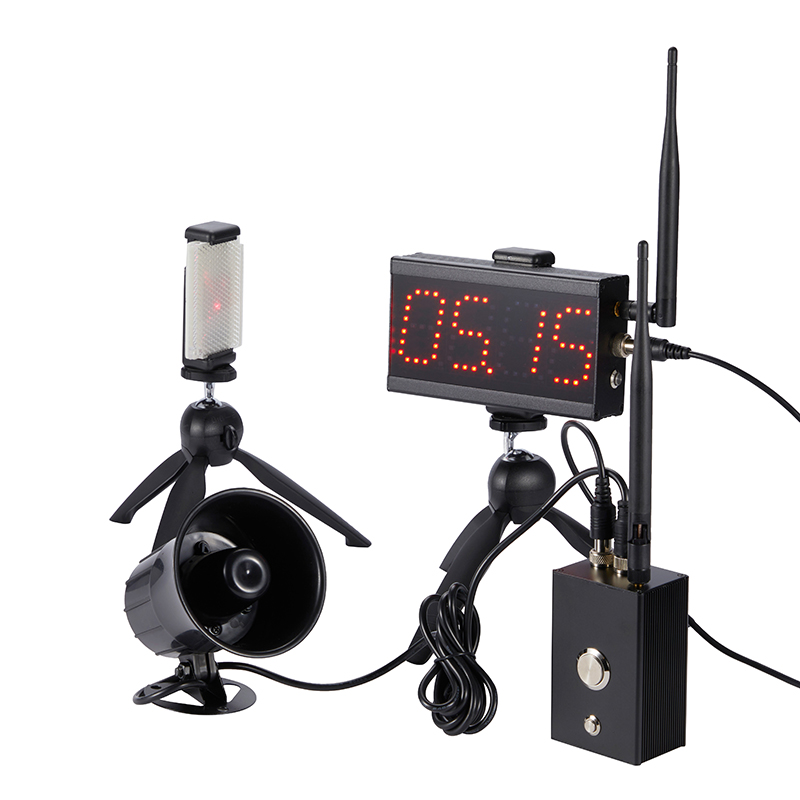
B-01 vs B-02 Portable Timing Kits for Field Sessions
Two timing kits can look similar in a product list while serving different session plans. The useful comparison begins with the start command, the result you need to record and the way the crew will move the equipment.
Start with the published use case
The B-01 Portable Wireless Timing Kit is presented for start-to-finish tests, simple lap timing and field sessions. Its likely fit is a coach or teacher who wants a compact lane, a straightforward result and equipment that returns to one case after the session.
The B-02 Portable Wireless Timing Kit is presented for gunshot starts, lap timing and mobile testing. That description puts more weight on a start procedure led by an operator. It does not mean every B-02 session must use a gunshot start; it means the start method deserves attention before the order is placed.
Compare the decision, not just the case
| Planning question | B-01 direction | B-02 direction |
|---|---|---|
| Primary session | Start-to-finish sprint tests and simple lap work. | Gunshot-start, lap and mobile field sessions. |
| Typical operator | Coach, PE teacher or club running a compact test. | Coach, school or mobile team managing a signaled start. |
| Start definition | Confirm how the first timing event is triggered. | Confirm how the command or gunshot-start workflow is connected. |
| Shared package idea | Timing host, sensor, tripod accessories, carry case and charging items by package. | Timing host, sensor, tripod accessories, carry case and charging items by package. |
| Before ordering | Confirm operating mode, exact package, power accessories, site conditions and any display requirement. | |
The product pages deliberately ask buyers to confirm timing accuracy, communication distance and power details by model, mode and package. Do not fill those gaps with a number copied from another system. A short pre-order diagram is more useful than an assumed specification.
Draw the start sequence before choosing
Write the session as a sequence of actions. Who releases the athlete? What starts the clock? What stops it? Who decides that a trial is invalid? If the answer is a simple athlete passage through a defined start and finish, B-01 matches the published start-to-finish direction. If an operator-led sound or gunshot start is central, review B-02 first.
The B-01 field workflow covers station labels, case inventory and a compact lane. The B-02 gunshot-start notebook focuses on the command sequence and the notes needed to reconstruct a signaled-start session.
Keep portability measurable
Portable does not simply mean that the equipment fits in a case. The crew still needs a repeatable packing order, a count of every component and a layout that can be rebuilt at another venue. Assign names such as start sensor, finish sensor, host, tripod and charger rather than writing "all equipment present" on the checklist.
Before leaving storage, power each required unit and inspect its mounting point. At the field, place the case outside the running lane and keep unused parts together. After the final trial, reconcile the inventory before the lane markings are removed. The timing system maintenance checklist provides a broader inspection routine.
Plan lap timing separately from sprint timing
Both product descriptions mention lap timing, but a lap session introduces questions that a straight sprint does not. Decide how the first passage is treated, how laps are identified and what ends the sequence. Keep an observer at the timing point when athletes may bunch together or when an extra crossing could be recorded.
For a detailed record structure, use the multi-lap timing workflow. If the event runs across a larger course, do not assume that a compact carry-case kit automatically meets the communication or station requirements. Confirm the route and site conditions with the supplier.
Check optional display and accessory needs
Both pages say an optional LED display can be quoted when results need to be seen from a distance. Decide who needs the display and from where. A coach standing beside the timing host has a different requirement from athletes, spectators or an announcer across a venue.
Also list every spare or replacement item by compatible model. The site provides separate pages for tripod stands, reflectors, antennas, power cables and a small speaker. Compatibility should be confirmed from the model and order record rather than judged from appearance.
Use a short pre-order brief
- Name the test, lane length and whether it is straight, lap-based or both.
- State whether the athlete self-starts or reacts to an operator command.
- List the number of timing points and people operating the session.
- Describe the venue, expected obstructions and where results must be visible.
- Request confirmation of package contents, charging parts and compatible accessories.
Practical choice: begin with B-01 for a simple start-to-finish field test. Begin with B-02 when a gunshot or operator-led start is part of the session. In either case, confirm the exact operating mode and package before ordering.
Questions about B-01 and B-02
Are the two kits interchangeable?
Do not assume so. Their product pages describe different application priorities. Send the intended start and finish sequence to 01TIMER for a compatibility check.
Can both kits be used for schools?
Both pages mention coaches or schools in their intended use. The better choice depends on supervision, the start procedure and the result workflow rather than the venue label alone.
What should be confirmed before payment?
Confirm the selected mode, package contents, compatible accessories, power arrangement, expected site conditions and display requirement. Use the request-a-quote form when the standard package does not describe the full setup.