01TIMER.COM / Timing system guides / repeated sprint test timing
How to Run a Repeated Sprint Test With Timing Gates
A repeated sprint test is more than several fast runs placed on one sheet. The route, start, recovery and athlete order determine what the series means. Timing gates make each effort easier to record, but the protocol still has to protect the comparison between the first and last sprint.
Define the series before the first run
Write the sprint distance, number of repetitions, recovery interval and start rule on the session card. State whether the aim is best speed, total work, or the drop in performance across the series. A short maximal sprint with long rest answers a different question from repeated efforts with a controlled turnaround.
Research on repeated sprint ability describes repeated maximal or near-maximal efforts of roughly 1 to 7 seconds with brief recovery periods in sports that demand this pattern [source: PubMed 11339490]. A soccer study used eight 30 m efforts with 30 seconds of active recovery in a reactive test, but that is an example protocol, not a universal prescription [source: PubMed 33237700]. Read the linked studies before adapting a test for your athletes.
Choose the route and lane format
Use a straight route when the question is acceleration or repeated straight sprints. Use a planned shuttle when the sport task includes turns. Do not call the two formats the same test. The S-002 shuttle session guide covers return-run timing, while this page focuses on repeated efforts that follow one defined route.
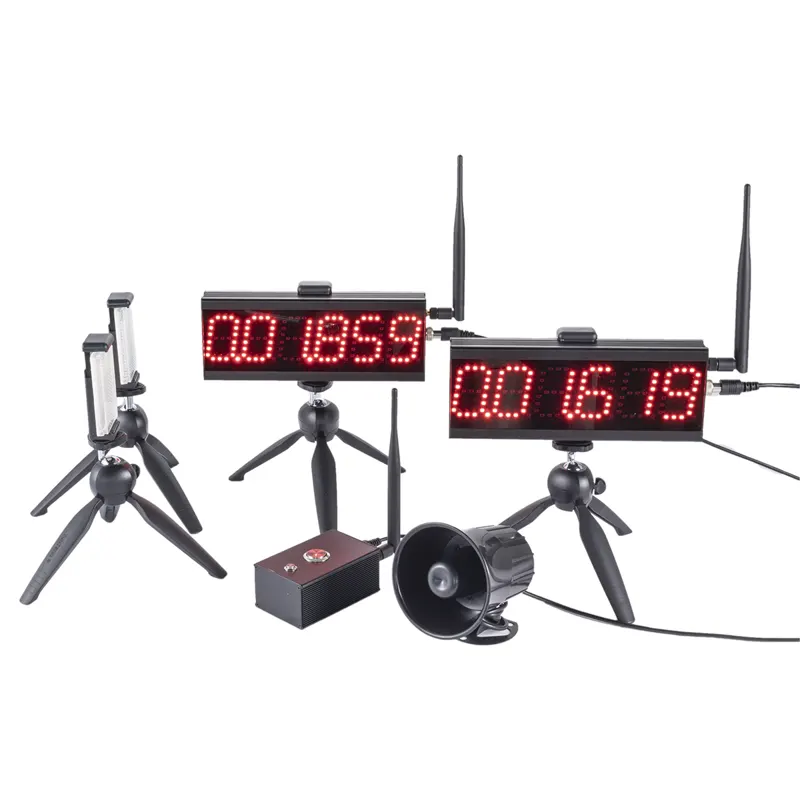
For a two-lane group, the S-003 product page describes two-track timing for side-by-side testing. Keep lane assignments visible and measure both lanes from the same reference. If the session needs four split or lane channels, compare the S-004 timing system instead of adding an unplanned gate.
Build an athlete queue that survives fatigue
Number the athletes before warm-up. Give each person an ID that stays with the result sheet, then set a fixed order for the series. A simple rotation can place two athletes in the lane while the next pair prepares, but the recovery clock must belong to the athlete who just finished, not to the group in general.
| Field | What to decide | Why it matters |
|---|---|---|
| Athlete ID | Use a name or code that never changes during the series. | Prevents a fatigued effort from being attached to the wrong person. |
| Effort number | Record 1, 2, 3 and so on, including invalid attempts. | Shows where a stop, slip or false start occurred. |
| Recovery | Start and stop the same recovery method each time. | Separates fitness change from a timing change. |
| Lane | Keep the lane fixed or document a planned switch. | Protects the comparison when surfaces or geometry differ. |
Check the gates as a complete chain
Measure the start and finish marks before positioning the equipment. Align the beam with the intended body passage, then walk through each point slowly. Follow with one controlled sprint through the whole route. The beam alignment guide explains how to document height and position so the series can be repeated.
Do not start the fatigue protocol until every gate produces the expected event. If the start rule uses a voluntary movement, give the same instruction to all athletes. If a gun, sound or external command starts the timer, name that signal on the record. The first effort is part of the test, so do not change the start after it has begun.
Keep every effort, not just the best
Record the time, effort number, lane and validity status after each run. A missed trigger, athlete obstruction or false start should remain in the raw record with a reason. Re-run only under the written rule. Quietly replacing a slow effort can make the final fatigue pattern look better than the session actually was.
For a clean series, report the best time and total time. A simple percent decrement can be calculated as 100 × (total time divided by best time multiplied by the number of valid efforts, minus 1). State the exact formula and whether invalid attempts were excluded. Readers should be able to reproduce the number from the raw rows.
Interpret the pattern with the conditions attached
A slower final effort may reflect fatigue, a longer recovery walk, a changed lane, or a start that was not equivalent. Check those conditions before turning the number into a training decision. The repeated-sprint result is strongest when the team can explain both the time and the setup that produced it.
Save the route diagram, gate positions, recovery rule and result export together. The CSV export workflow helps keep athlete IDs and effort numbers attached when the session moves into a spreadsheet. For split-based analysis, link the relevant 5 m versus 10 m split guide beside the result file.
Session rule: the comparison is only as stable as the recovery, lane and start details you keep unchanged.
Questions about repeated sprint timing
How many efforts should a repeated sprint test include?
Use the number required by the sport question and the published protocol you are following. Record the choice and keep it unchanged when comparing sessions.
Can I compare a straight sprint series with a shuttle series?
No. Turns, braking and re-acceleration change the task. Store them as separate tests with separate labels.
Should I report only the best time?
No. Best time shows peak speed, while the complete series and total show how performance changed under the chosen recovery rule.