B-02 Club Lap Timing: Keep a Clear Run Record
A club lap session needs more than a string of times: every passage has to belong to the right runner, run and lap sequence. Set up the B-02 around a stable event record so coaches can review the session without guessing which lap a value represents.
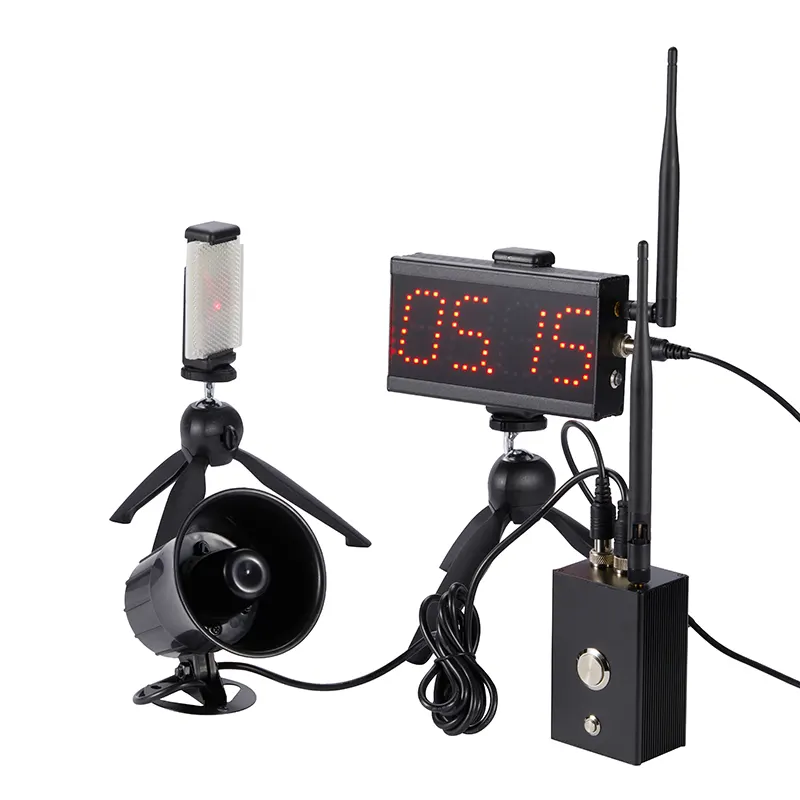
The B-02 product page lists single or multi-lap timing as an operating mode and describes the kit as portable for coaches, schools and mobile sessions. It lists a timing host, laser sensor, tripod accessories, carry case and charging accessories, with power and exact operating details varying by package. This article focuses on the lap log and session controls, not unconfirmed automatic scoring features.
Define the lap before counting it
Draw the course and mark the timing point that defines one completed lap. State the travel direction and how the first passage is handled: does it establish a start reference, count as lap one or get excluded under the session protocol? Decide the same for the final passage. Write the rule on the session sheet where the operator and recorder can see it.
| Record field | Purpose | Example note |
|---|---|---|
| Athlete ID | Connects every lap to one participant | Roster number, not only a name |
| Run ID | Separates a repeat from the original attempt | Session date plus sequence |
| Lap sequence | Shows missing or extra passages | 1, 2, 3, finish |
| Course version | Documents the route and timing point | Map revision or setup label |
| Exception | Explains a review or correction | Blocked sensor, wrong direction, rerun |
Keep gunshot-start workouts in a separate session block. The B-02 page presents gunshot-start and lap timing as different modes, and the B-02 start-line notebook is specifically about preparing the start signal. A lap worksheet has a different event sequence and needs lap-number fields.
Check the course and operator sequence
Place the sensor and tripod according to the approved course plan, away from the running path and in a position where participants pass the defined line consistently. Confirm that the selected mode matches the planned lap workflow. Ask one tester to complete a controlled passage while the operator and recorder verify that the record is associated with the expected event and sequence.
Repeat the check if the timing point moves or the course changes. A sensor crossing is not a substitute for a coach watching the course: a participant may cut across the line, miss the intended path or complete an extra passage. Keep a marshal or observer responsible for noting those exceptions if the session requires it.
Review the sequence, not just the fastest value
At the end of a run, compare the number of expected laps with the records received. Flag a missing or unexpected passage for review. Keep the raw timing value, identify the run and write down the decision made under the coach's protocol. Avoid deleting a time just because it differs from expectation; preserve the original and distinguish any accepted correction from the source record.
For a training session, a coach may care about lap-to-lap consistency or pacing, but the meaning depends on the route, number of laps and start rule. Do not compare values from a short loop with a different course as if they represent the same workload. The S-005 multi-lap review guide offers a broader way to reconcile lap sequences, while the roster export guide covers participant IDs and reusable result columns.
Pack the kit with the session record
Before the team leaves, save the run sheet, course version and any exception notes together. Check the carry case for the listed kit components and inspect the sensor, tripod accessories and power items against the selected package. If anything is missing or damaged, write it down before the next session instead of relying on a verbal handoff.
For a mobile club that moves between venues, record the site-specific setup assumptions: surface, route direction, station position and any power or communication checks required by the supplier. The field spares checklist helps plan backup items; the B-02 product page remains the source for current package information.
B-02 lap workflow questions
Does B-02 support lap timing?
The current product page lists a single or multi-lap timing mode. Confirm the selected package and operating steps before the session.
How should a club handle a missed or extra lap record?
Keep the original record and mark the run for review. Use a named official and the club's stated rule to decide whether to repeat, correct or exclude the attempt.
Can B-02 lap times be treated as official race results?
That depends on the event regulations, equipment acceptance and appointed officials. Confirm the method with the organizer rather than assuming product use confers approval.
Related reading: B-01 vs B-02 kit comparison, multi-hour lap scoring, lap result review, and confirm a package with 01TIMER.