How Coaches Can Review 1500m Lap Splits With S-005
A 1500m lap timing record can show a race's shape, but only when the timing point, distance labels and comparison question are fixed before the first runner starts.
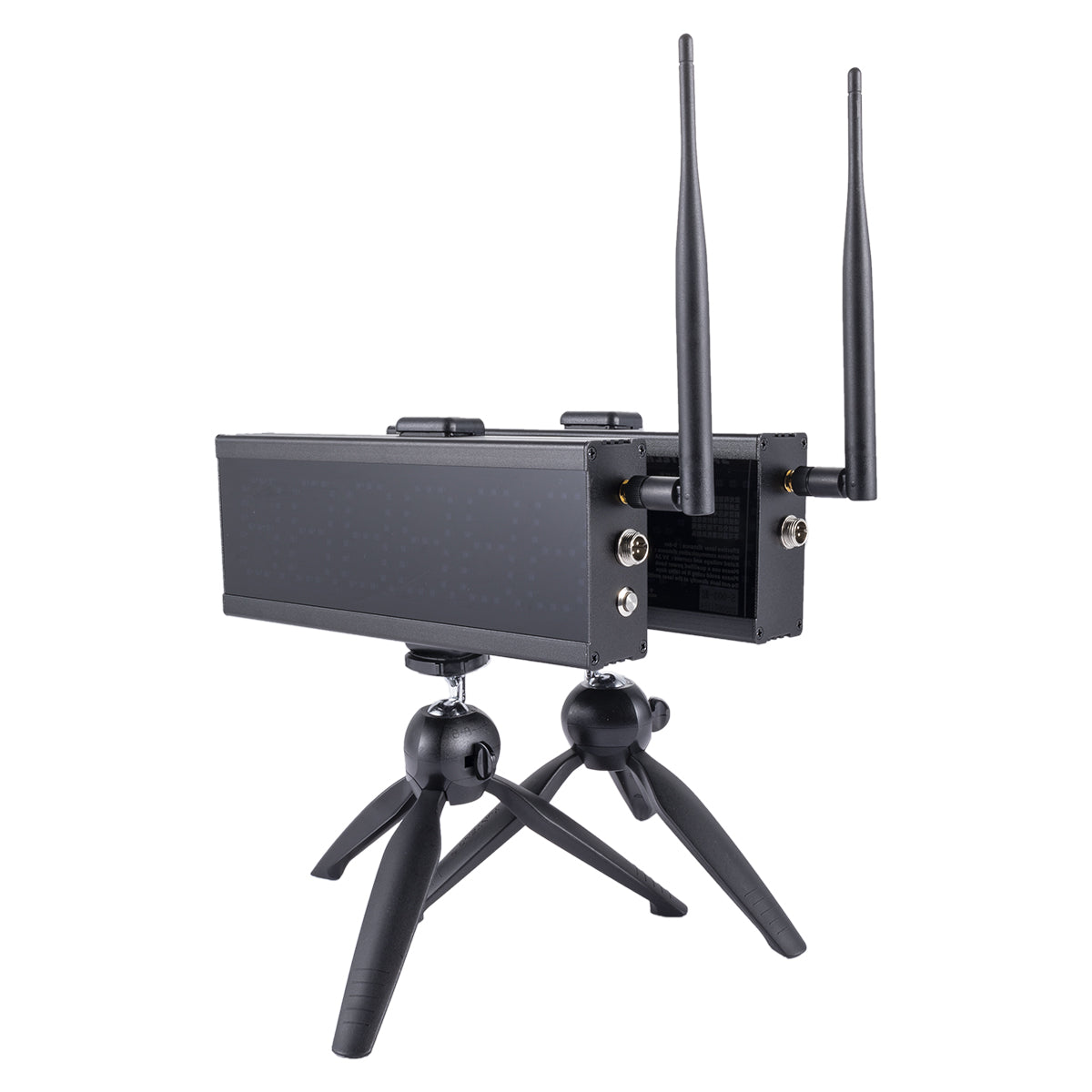
The S-005 multi-lap system is listed for repeated lap timing and total-time measurement. For a coach, its useful contribution is an ordered timing record at the configured crossing point. It does not explain tactics, measure the course, or decide whether a runner was impeded.
Make the lap definition match the distance
First write down the track and lane. Then mark the timing plane and define each recorded event in plain language: start, passage one, passage two, and finish. A standard 400m oval does not divide 1500m into four identical laps. The remaining 300m must be described as its own segment or as a finish reached before another full circuit.
That distinction matters when you compare a 1500m test with a 1600m or mile effort. A spreadsheet column named “lap 4” can mean a full lap in one protocol and a shorter final section in another. Use distance labels such as 0-400, 400-800, 800-1200 and 1200-1500, and state whether values are segment or cumulative times. The cumulative versus segment guide explains the difference.
Choose the comparison question
Before pulling up the results, decide what you want to learn. Is the runner's opening too fast? Did the middle section drift? Did the final 300m change after a different training block? Those questions call for different views of the same record. Keep the total time visible, but do not let it erase the split pattern.
| Question | Useful view | What not to conclude from timing alone |
|---|---|---|
| Was the opening controlled? | First measured section against the target plan | A slower opening is not automatically better pacing |
| Did pace drift in the middle? | Compare like-for-like middle segments | One slow split does not diagnose fatigue by itself |
| Was the finish stronger? | Final 300m with start position and race context | A short final segment is not directly comparable to a full lap |
| Did the athlete improve? | Match course, start, warm-up and timing plane across sessions | Different protocols should not be merged into one trend |
Research using elite 1500m races shows tactical variation rather than one fixed lap pattern. Those championship observations are not a pacing prescription for a training time trial. They are a useful reminder to describe the actual race context. See the analysis of 1500m world-record performances and a broader review of Olympic 1500m pacing.
Build a review sheet that keeps evidence attached
For every attempt, keep the athlete ID, date, course, lane, start cue, timing plane, configured lap sequence, raw times and any exception note. If an athlete was boxed in, stumbled or ran in traffic, record that separately rather than editing a split. A coach can then decide whether the attempt answers the intended question.
Do not remove a slow split just because it looks unlikely. Compare the raw order with the operator's observation and the timing equipment's event record. If one passage may have been missed or duplicated, pause the analysis and use the missed-lap audit workflow. The general S-005 lap result guide also covers result-sequence review.
Run a rehearsal before a team time trial
Walk the track and show the operator the exact line. Confirm that athletes cross the line in the intended direction and that the configured mode is the one described in the session plan. Have a test runner make one controlled circuit; verify the event order, athlete identity and result display before collecting scored attempts.
For staggered or crowded tests, assign a person to observe runner identity at the line. A timer can register a passage without knowing which athlete caused it. If two runners arrive together, use the event's identification rule and flag uncertainty. Do not infer identity from expected pacing.
After the session, export or transcribe raw results before calculating averages. Store the course map and protocol next to the file. The CSV export guide and athlete data workflow provide examples of retaining result context.
Use the splits to describe, not diagnose
A timing log can show that the final segment was faster or slower than the middle. It cannot tell you whether the cause was fitness, tactical choice, wind, traffic, pacing cues or a change in effort. Pair the lap record with the coach's notes and the athlete's own account before deciding what to change in training.
When comparing two dates, keep the same lane and timing plane, and note surface conditions and warm-up. If the course or start method changes, label a new series. A clean protocol often reveals more than another decimal place in the display.
1500m lap timing questions
Should the last section be called a lap?
Only if your event defines it that way. On a 400m track, label the 1200-1500m section as 300m so it is not confused with a full circuit.
Can I compare a training trial with a tactical race?
Compare the measured times carefully, but record the context. A tactical race and a solo time trial ask different performance questions.
Does S-005 choose the lap mode for my course?
Check the current product documentation and setup procedure for the selected configuration. This guide defines the result fields, not device-specific programming steps.
Sources and further reading
- Pacing strategies during male 1500m running world-record performances.
- Evolution of 1500-m Olympic running performance.
- S-005 product details and the multi-lap workflow.
Before the next session, write down the course, timing plane, lap labels and comparison question. That small note makes the S-005 record easier to interpret and gives the athlete a fair comparison when conditions or tactics differ.