01TIMER.COM / Timing system guides / S-004 package check
Field note · 30 Sep 2026
S-004 Four-Lane Package Check Before Event Day
A four-channel system is only ready when every station has an owner. Use this receiving check to turn the S-004 package list into a labeled event kit before the first athlete is called.
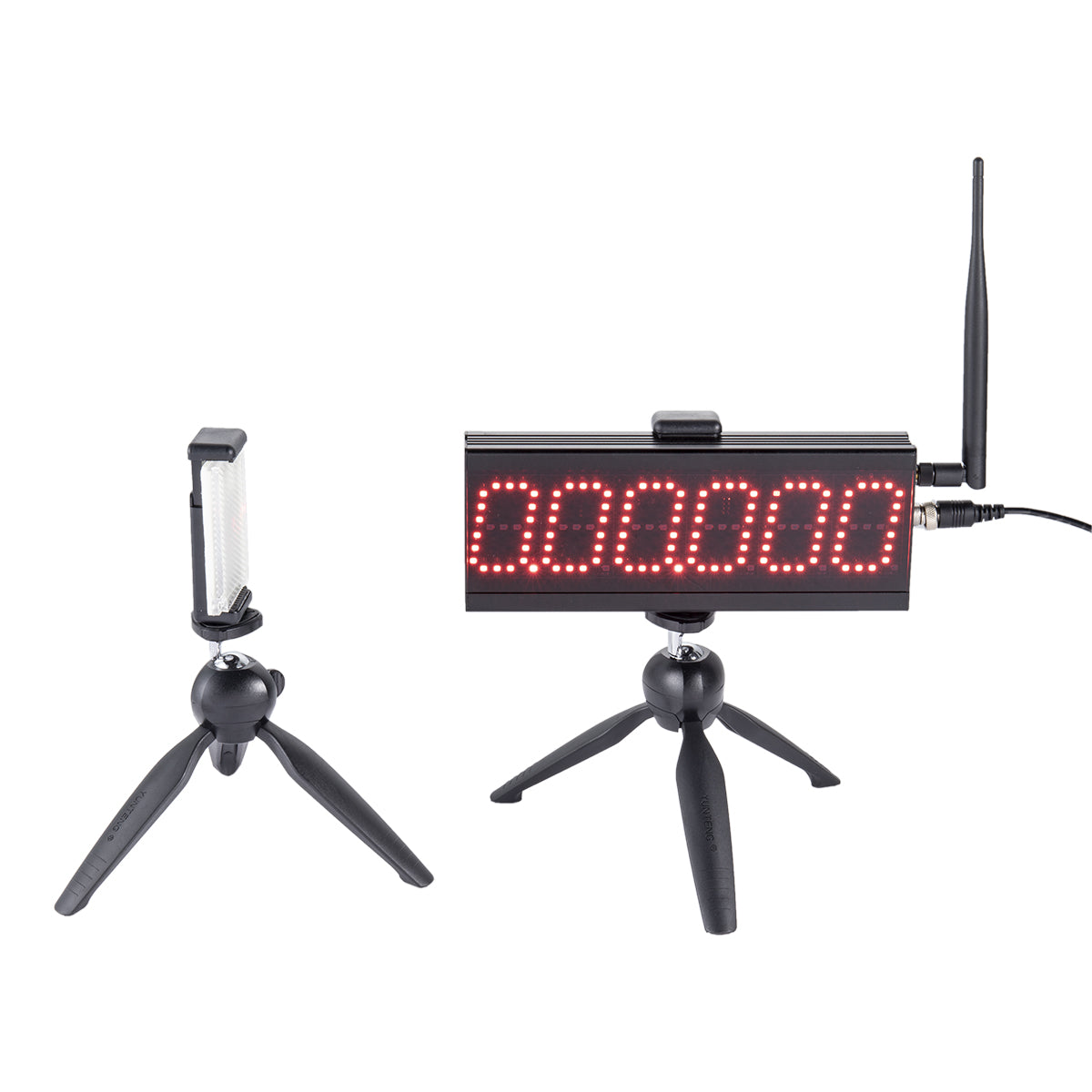
Working rule: inventory is not complete until each display, reflector and tripod has a channel or station label.
1. CountMatch the delivered parts to the current order confirmation.
2. LabelAssign channels 1 through 4 to lanes or split points.
3. PowerCheck cables, control box, displays and charging plan.
4. RehearseWalk each beam and confirm one event per crossing.
Start with the official package list
The current S-004 product page identifies the model as a four-channel competition timing system for four-lane race timing, interval training, split timing and technical testing. It lists a wireless electronic control box, four 6-digit high-brightness LED displays, four laser reflectors, a command speaker, eight tripods, five power cables, four screen back clips and two equipment cases.
Print the list or keep it beside the open cases. Count parts while they are still grouped by case. A component that is present but assigned to the wrong station can create the same operational problem as a missing component.
Make four station cards
Create one card for each channel. Put the channel number, lane or split name, display number, tripod pair and expected crossing on the card. If the session changes from four simultaneous starters to sequential split work, make a new card instead of writing over the old plan.
| Station card field | What to write | Why it matters |
|---|---|---|
| Channel | 1, 2, 3 or 4 | Prevents a correct result being assigned to the wrong lane. |
| Location | Lane, split mark or finish | Links the hardware to the physical course. |
| Display | Display number and viewing side | Lets the operator check visible output quickly. |
| Owner | Setup or result-review person | Gives every station a clear handoff. |
Check the physical hardware
Inspect the reflectors and tripod fittings before placing anything on the track. The eight tripods in the listed package can cover four stations when each station uses a pair, but the final layout should follow the confirmed operating mode. Keep unused stands in the case so they are not mistaken for a deployed station.
Lay out the five power cables and note which item each one serves. The S-004 page lists DC 5V 2A power and up to 0.001 second timing accuracy. Those published specifications do not replace a cable, display or battery check at the venue. Read the maintenance checklist before packing a kit that has been stored for a while.
Run the channel rehearsal
Place the four timing points from one end of the course to the other. Use the beam alignment and height guide for each gate, then walk through channel 1, reset, and continue in order. A walk-through should produce one identifiable event, not a cluster of uncertain results.
The product listing gives a best-condition communication distance within 500 m and a typical condition of 200 to 300 m. Treat those numbers as planning references. Walk the control route, check obstructions and record the tested position on the station card.
Agree on result ownership
Before the first live run, decide who calls the athlete, who watches the course and who records the result. A four-lane race may use one result per lane. A split session may use four results for one athlete. Use the same channel names in the result sheet and in the CSV and athlete-roster workflow.
Keep invalid trials visible. Mark a moved stand, a blocked beam or an incorrect lane rather than deleting the row. This makes the event record easier to review and gives the next operator a reason for every gap.
Give the result reviewer a short handoff note: the session mode, the channel map, the first valid attempt and any station that was reset. If a coach sees four numbers on four displays, the note should still explain which number belongs in the official result. Clear ownership matters most when the operator and the person exporting the data are different.
Close the case with a signed handoff
At the end of the check, photograph the open case or attach the signed inventory to it. Record the event date, channel map, communication test position and any part awaiting replacement. The S-400 station handover record offers a useful structure even when the event uses an S-004.
If the venue needs more timing points or a longer course, compare the S-007 multi-point layout and the S-006 course survey before changing the package.
Final check: four channels, four labels, four tested crossings, and one person responsible for the result sheet.