01TIMER.COM / Guides / S-400 handover
S-400 Timing Station Handover for Multi-Point Events
The layout is often correct when the installer leaves. Trouble begins when the start marshal, checkpoint staff and results desk are working from three different versions of that layout.
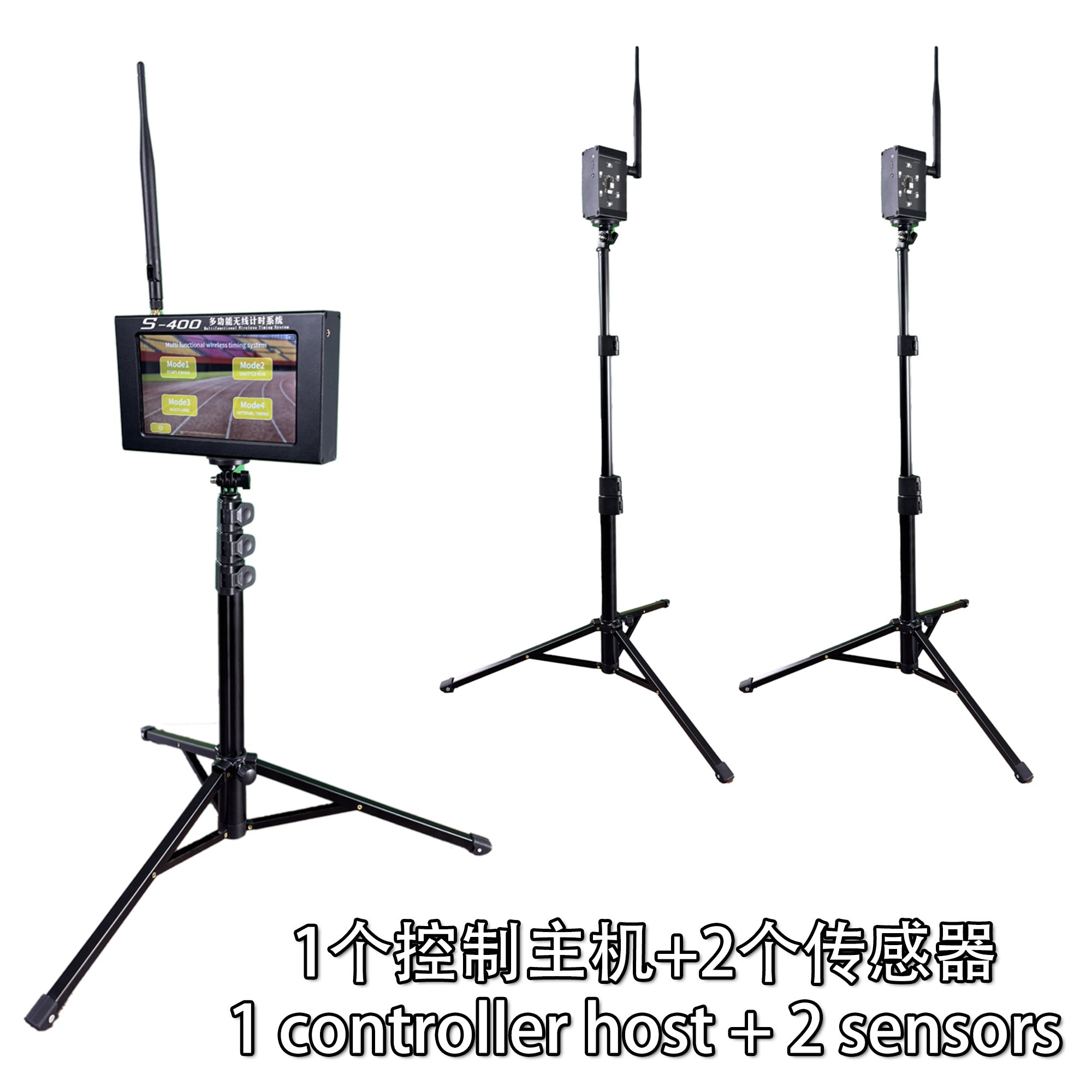
The 01TIMER S-400 is described as a configurable wireless, multi-point timing system. The controller and chosen sensor package depend on the quoted event plan; an optional display and other components also need confirmation. This S-400 timing station handover is a working document for a configured course, not a claim that every S-400 order contains the same stations or covers a fixed distance.
Start with the route revision, not the equipment case
Give the route map a version number, date and owner. Mark the start, intermediate points, finish, lanes or stages and the direction of travel. Each physical station needs an unambiguous name that matches the host setting and results column. The S-400 planning guide addresses the earlier task of selecting a layout. At handover, check that the installed positions actually match the approved drawing.
Ask the venue lead about barriers, power access and planned course changes. A marshal may move a tripod a short distance to clear a walkway and unknowingly change the measured segment. Record the surveyed position in terms a replacement crew can find, and make the route revision visible at the start and results desk. The rally setup guide is a useful reference when a route crosses multiple staffed locations.
Make the handover sheet small enough to use
| Field | What to write | Checked by |
|---|---|---|
| Route version | Map ID, effective time and direction | Event lead |
| Station assignment | Physical label, host label, lane or checkpoint and operator | Setup operator |
| Acceptance pass | Named tester, order of observed triggers and result ID | Results lead |
| Exceptions | Who pauses a run, marks a missing point and authorizes a rerun | Event and results leads |
Keep the station list alongside the equipment inventory. Confirm each selected sensor and mount against the order rather than assuming a standard S-400 kit. The spare-parts checklist helps separate confirmed compatible replacements from generic field supplies. Note the controller ID and the agreed way to contact the technician if a point goes offline.
Walk one complete route as a result
With the event still closed to competitors, send a named tester through the planned route in the correct sequence. The receiver operator should see the right station names in order; the results operator should find the same attempt under the tester's identifier. Check what the system does when a tester passes only an intermediate point or approaches from the wrong direction, where it is safe and practical to do so. Write down observed behavior, not assumed safeguards.
Run the acceptance pass under the conditions the live course will use. A controller test beside the equipment table cannot establish communication from a remote checkpoint. The wireless connection check provides a fault-isolation order if a station reports inconsistently. Check alignment at the real crossing with the beam alignment guide, and keep spectators away from sensors and the tester's path.
Plan for a missed point and a late route change
Agree who can stop a start, whether a run with a missed split is provisional, and where the incident note lives. The checkpoint results guide covers the distinction between a recorded checkpoint and a missing one. Do not turn an absent event into an invented time. If a point must move after sign-off, close the affected route, publish the next map version and repeat the acceptance pass before reopening it.
Export or copy the provisional record before changing a channel or station label. The roster and CSV guide explains why stable participant IDs matter during result review. Tag results with the route version if two layouts operated on the same day, so later comparisons do not treat different segment lengths as equivalent.
Finish with a real shift transfer
The outgoing operator should point at the route map and demonstrate one station record to the incoming operator. Hand over the last successful test time, the equipment status, known exceptions and contact list. Ask the incoming person to repeat the station names and the pause procedure. A signature without this read-back is only paperwork.
For package questions, send the actual route revision and required number of points through the quote form; for an installed package fault, use the contact page with the system model and order reference. Keep any claimed communication distance, precision or power option tied to the confirmed configuration and current documentation.
Handover questions
Can one standard checklist cover every S-400 event?
The record fields can be reused, but station count, spacing and supplied hardware must come from the selected package and course map.
Is one successful test at the controller enough?
No. Observe a complete pass at the installed stations and confirm that each event lands in the correct result field.
What should change after a checkpoint moves?
Issue a new map version, brief staff, run the affected route again and separate results by version.