01TIMER.COM / Timing system guides / expansion planning
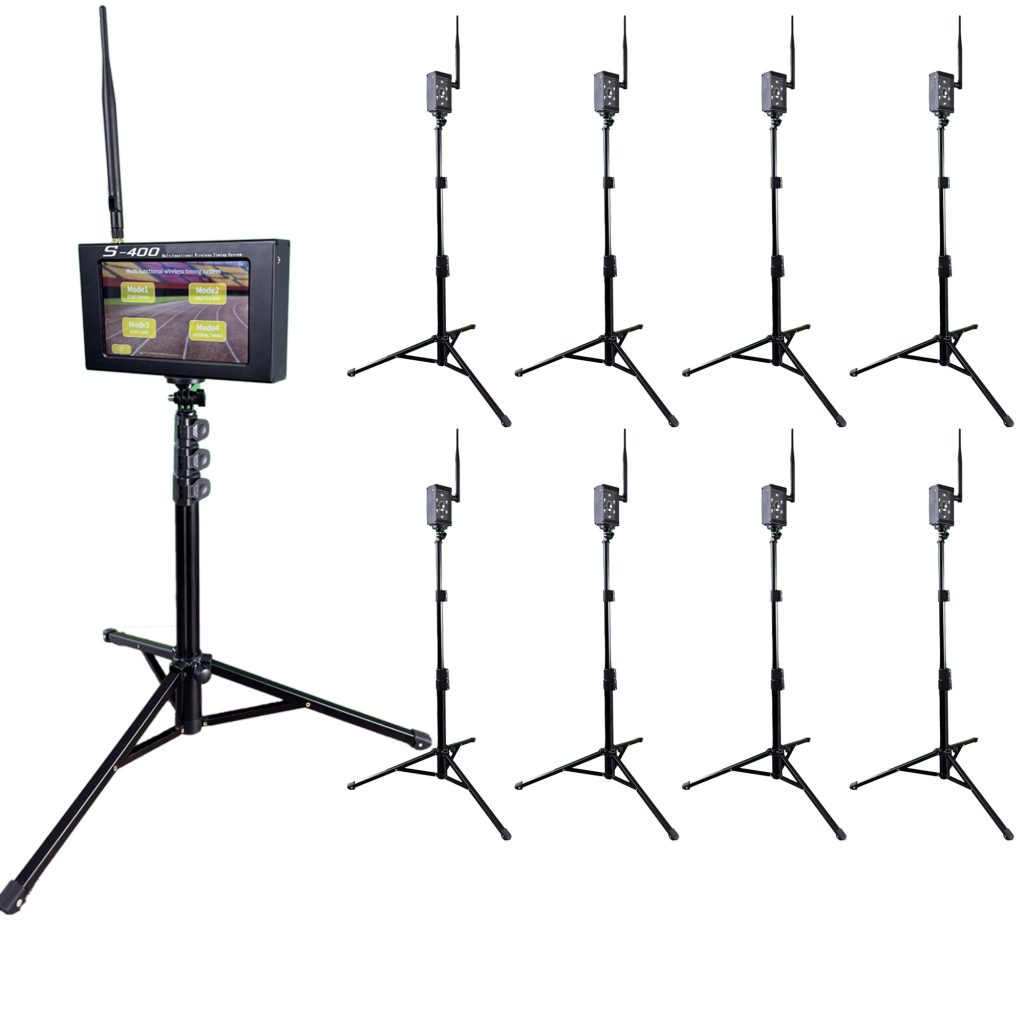
Timing System Expansion: S-007 or Configurable S-400?
A timing system expansion should begin with a result at a particular place, for a particular event, with a crew that can rebuild the layout next month. A venue rarely needs “more gates” in the abstract.
Map the present course before the future system
Walk the route and mark every event that could start, split or stop a record. Use plain labels such as sprint start, 10 m split, finish, shuttle turn, stage entry or rally checkpoint. Then cross out any point that does not lead to a coaching, ranking or event decision.
This map creates the basis for comparing the S-007 multi-point system and the S-400 configurable system. It also gives the supplier something concrete to confirm.
Read the two product directions carefully
| Planning area | S-007 direction | S-400 direction |
|---|---|---|
| Published system type | Advanced laser gate timing. | Multi-point timing architecture. |
| Named applications | Interval, segment and multi-track timing. | Sprint gates, stage points and multi-gate rally layouts configured by request. |
| Package approach | Controller, laser timing gates, tripods, wiring accessories and setup support. | Control host with a selectable sensor package, mounting hardware and setup guidance. |
| Best planning fit | A defined advanced testing workflow across multiple points. | A buyer who needs host and sensor quantities matched to venue size and modes. |
| Display | Optional LED display can be quoted. | Optional LED display and accessory packages can be quoted. |
| Facts to confirm | Exact gate quantity, mode, accuracy, power and site range. | Selected host/sensor package, mode, mounting, accuracy, power and site range. |
These descriptions overlap, but the buying logic differs. S-007 begins with an advanced multi-point use case. S-400 foregrounds configuration: the current page offers choices from two sensors without a control host through host packages with two, four, six or eight sensors. Do not choose from that list until the role of each component is clear.
Use S-007 when the workflow is already defined
S-007 suits a training program that knows why it needs several timing points. One coach may want interval times along a straight sprint. Another may want segment data or a multi-track layout. The common feature is that each point has a stable job and the session can be rehearsed as one system.
Give each physical station the same ID on the course map, equipment label and result sheet. Check the route in timing order rather than walking to the nearest stand. The S-007 layout guide gives a station-by-station method. For maximum-speed zones, the flying sprint setup explains how to distinguish the run-in from the measured section.
Use S-400 when configuration is the main requirement
S-400 is the stronger direction when a venue expects different layouts or must select sensor quantities around its own architecture. Its page lists start-finish, shuttle-run and multi-lane setup videos, as well as configurable host and sensor packages. Those modes do not share one universal map.
A package without a control host may be relevant to an existing compatible setup, but compatibility should never be inferred from a product photo. Record the model and order details of existing equipment and ask whether the proposed sensors, controller, display and accessories work together. The earlier S-400 planning guide covers the initial package conversation.
Build an expansion map in three layers
Layer 1: the minimum operating layout
Draw the smallest course that produces a useful result. For a straight sprint, that may be a start and finish. For a shuttle, it includes the exact turn and crossing logic. For a rally-style event, define each stage boundary and who validates it. The rally checkpoint guide shows why station identity matters as much as station count.
Layer 2: the next justified measurement
Add one point only when it changes a decision. A 10 m split might separate early acceleration from later speed. Another display might let an athlete read a result without entering the operator area. Write the reason beside the added component; if the reason is merely “future use,” leave it in the future layer.
Layer 3: venue growth
List realistic changes over the next two seasons: another lane, a second training area, a longer stage, more visible results or an additional operating crew. For each change, note whether it needs sensors, a compatible controller, tripods, power, displays, transport cases or staff training. This becomes the expansion brief sent with the quote request.
Budget for operation, not only sensors
Every added timing point needs a stable mount, a power or charging routine, an alignment check, a label and a place in the inventory. It may also add a result field and another failure mode. Include replacement parts and setup time in the plan. The maintenance checklist and field spares guide help turn those hidden tasks into a countable list.
If results must be visible at distance, specify the intended reader and viewing position rather than asking generically for a screen. Review the ML-01 and X-001 PLUS display fit guide, then confirm electrical and communication compatibility for the selected system.
Put timing system expansion in writing
- Attach a labelled course diagram with distances and obstructions.
- Name the operating modes that will be used in the first year.
- List existing 01TIMER equipment by model and order, if any.
- State the required sensor, controller and display roles in plain language.
- Ask for the supplied mounting, power, charging and transport items.
- Request setup guidance for each planned mode, not only the largest layout.
Keep the confirmed configuration beside the equipment inventory. If a later purchase expands the system, update both documents rather than relying on memory.
Expansion rule: begin with S-007 when a stable advanced multi-point test is already defined. Begin with S-400 when selectable host and sensor quantities are central to several venue layouts. In both cases, buy against a labelled map and a confirmed compatibility record.
Questions about multi-point expansion
Is the eight-sensor S-400 package automatically the safest future choice?
No. A larger package adds value only when its roles, compatible components and operating modes are understood. An unassigned sensor still adds storage and inspection work.
Can S-007 cover more than sprint splits?
Its current product page describes interval, segment and multi-track layouts. Ask 01TIMER to confirm the exact package and setup for the planned course.
How should a venue start the buying conversation?
Send the three-layer map, current equipment list, mode requirements and future changes through the request-a-quote form. Treat the written configuration response as part of the system record.