01TIMER.COM / Timing system guides / soccer acceleration testing
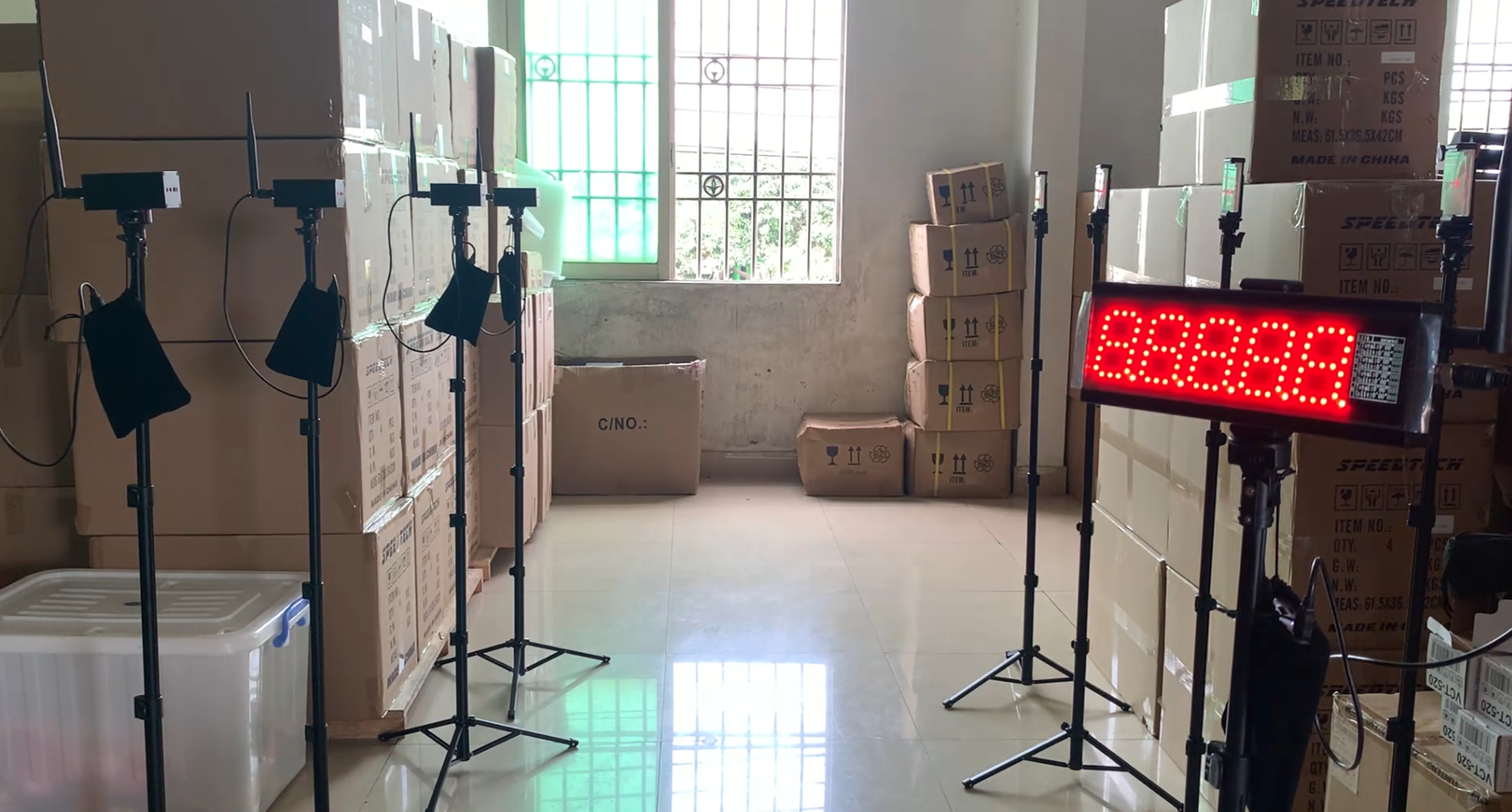
Soccer Acceleration Testing with Timing Gates
A soccer sprint test becomes useful when the coaching staff can repeat it on the same patch of turf and understand what each split measures. The first task is choosing the question. Early acceleration, continued acceleration and speed through a later zone require different gate layouts and different result labels.
Choose one purpose for the sprint
A short test can focus on the first steps from a stationary start. A longer route can include more of the acceleration phase. A flying section removes the standing start from the timed zone and asks a different question. Put the purpose in the protocol name so a coach does not compare unlike tests months later.
Soccer roles do not need separate timing rules unless the staff has a clear reason to create them. A shared protocol makes squad comparisons easier to read. Individual baselines can still be more useful than a single team ranking when players have different training histories.
Build the split map from fixed field marks
Measure every timing point from one start reference. Use paint, tape or low-profile markers that survive the testing block without becoming a trip hazard. Record the side of the field, running direction and the exact edge of each mark used for measurement.
A multi-point layout needs unambiguous station names. Label the start, each split and the finish before pairing devices or assigning channels. The S-007 multi-point layout guide covers the planning work that comes before powering a larger gate arrangement.
Decide what each split will report
| Timing section | Question it can support | Detail to preserve |
|---|---|---|
| Start to first split | How quickly the athlete covers the opening section from the chosen stance. | Start line offset, stance, rocking rule and trigger method. |
| First to second split | How the athlete continues to build speed after the opening steps. | Both gate marks and whether the value is recorded directly or calculated. |
| Later flying zone | How quickly the athlete crosses a defined zone after an approach. | Approach distance, zone length and finish run-out. |
The 5 m versus 10 m split guide explains why split length changes interpretation. Use the unit system chosen by your program and write it beside every distance.
Keep the start method unchanged
Place the athlete behind the first beam using a measured offset. Define the stance and whether a backward rock, step or lean is allowed. A self-started trial should not share a comparison table with a trial triggered by an external signal unless the report separates them.
A study of high-level female soccer players used timing gates across a linear sprint and examined how the start affected estimates derived from the split data. The authors found that time correction changed the modeled mechanical results. Read the published soccer timing-gate study before using split times to estimate force or power. Raw sprint times and derived mechanical models are not the same output.
Check turf, beam position and run-out
Walk the lane and remove balls, cones and portable goals from the beam line. Note whether the turf is dry, wet, natural or synthetic, along with the footwear rule. Keep enough clear space beyond the final gate for athletes to slow down without entering another station.
Set each beam using the same method and verify it with a controlled passage. The alignment and beam-height guide provides a repeatable pre-test check. For weather and surface records, use the outdoor sprint conditions guide.
Store whole trials before making summaries
Give every attempt its own row with athlete ID, attempt number, start method, split values, total time, validity and notes. Do not keep only the fastest value at each gate. The original row shows whether several strong splits occurred in one sprint or in separate attempts.
When staff want a best-split summary, state whether all values came from the same trial. Keep the unedited export with the session record. The CSV and roster guide shows a structure that remains readable across a full squad.
Compare sessions with a conditions check
Before comparing dates, line up the course direction, surface, footwear rule, start offset, beam height, split positions, warm-up and rest plan. If the layout changes, start a new comparison series. The team testing-day workflow can help staff control athlete order and invalid trials when the roster is large.
Field note: preserve the measured split map with the results. A list of times without the map is difficult to reproduce.
Questions about soccer sprint timing
Can players start with a ball?
Yes, when ball control is part of the question. Keep ball and non-ball trials as separate protocols because they are different tasks.
Should every sprint use multiple splits?
No. One start-to-finish time may be enough for a narrow question. Add splits only when the staff will use the extra information.
What invalidates a trial?
Write the rule before testing. Common reasons include an unauthorized start movement, another person crossing a beam, a missed gate or an athlete slowing before the finish.