01TIMER.COM / Timing system guides / camera or laser timing
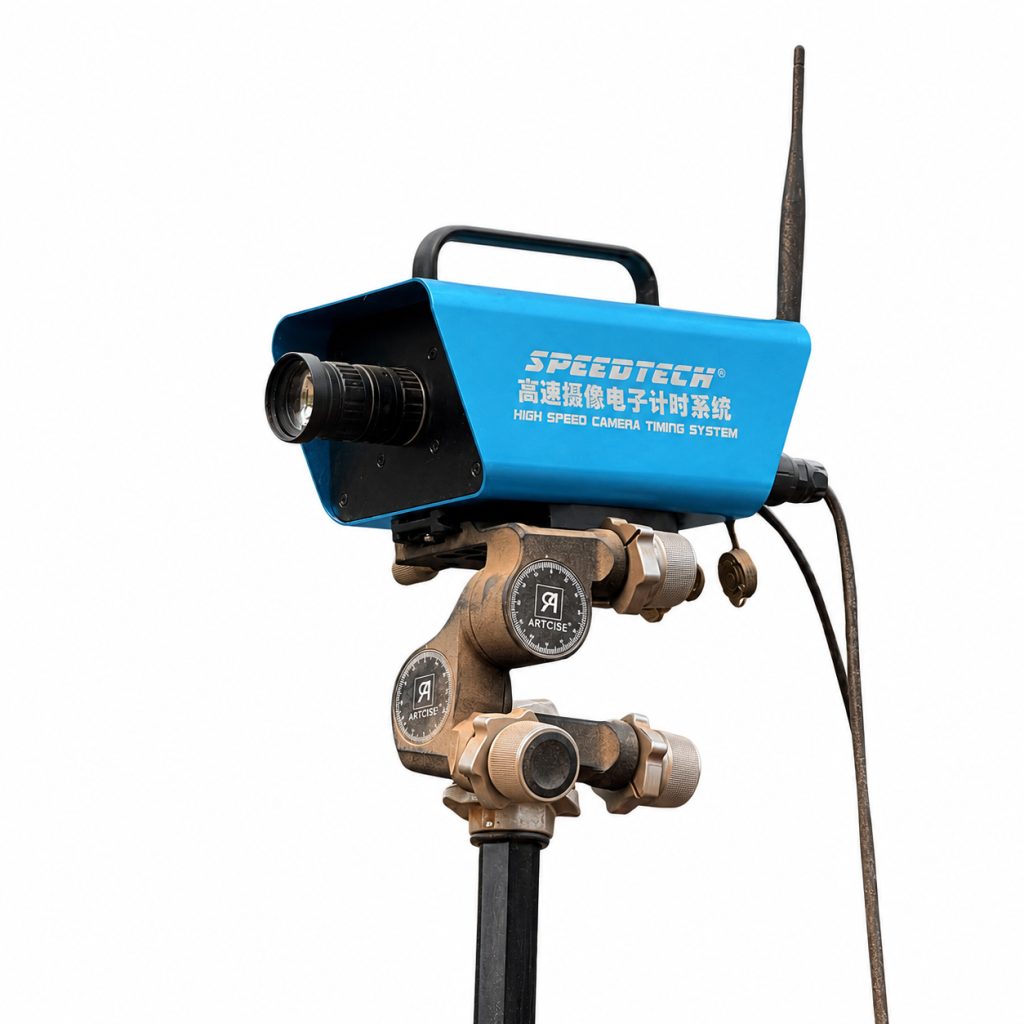
Event decision file
Camera Timing vs Laser Gates: How ST-1000 Fits Events
Camera timing vs laser gates is easier to decide when the event names its unanswered question. A gate can mark a crossing in an elapsed-time workflow. A finish camera is considered when officials also need visual evidence of the crossing.
Write the result problem in plain language
Use one sentence. “We need a repeatable time between start and finish” describes a timing problem. “We need to confirm which competitor reached the finish first” describes a review problem. Some events have both, but combining equipment does not combine the rules automatically.
The current ST-1000 product page describes a high-speed camera and timing system for motorsport, sprint finish review and event timing confirmation. It does not publish one general judging rule. The event organizer must define what body, wheel or other reference decides the finish under the applicable regulations.
Laser gates create timing events
A laser gate setup uses a defined sensor crossing to start, split or stop a timing record. The result is useful when the test protocol explains what each beam event means. In training, that may be a sprint start and finish. On a longer course, it may be a finish station or an intermediate split.
The equipment choice changes with the number of lanes, splits and laps. The timing system selection matrix maps those uses to current 01TIMER models. The photocell and laser gate guide covers detection method and alignment without treating a gate result as a finish image.
ST-1000 adds a finish-review workflow
ST-1000 is listed for a different job: camera timing and finish confirmation. The page states that the high-speed camera timing unit, mounting accessories and setup support depend on the quoted package. Power, timing accuracy, communication distance and operating mode also require package or model confirmation.
That configuration work extends beyond mounting a camera. The event needs a physical finish reference, an unobstructed view, an operator, a review rule and a file-retention plan. The existing ST-1000 finish review guide explains how to connect a captured finish with an event ID and named reviewer.
Compare the evidence each workflow keeps
| Event requirement | Laser gate workflow | ST-1000 camera workflow |
|---|---|---|
| Start-to-finish elapsed time | Use defined beam events and the selected timing mode. | Confirm whether the quoted configuration supplies the required timing mode. |
| Intermediate splits | Use a compatible multi-point layout with named gates. | Not the primary use published on the ST-1000 page. |
| Close finish review | A displayed time alone does not provide a finish image. | Published for sprint finish review and event confirmation. |
| Result record | Timing values, protocol, station IDs and exception notes. | Capture file, event ID, review decision and related timing record. |
| Setup confirmation | Model, mode, gate layout, alignment and site conditions. | Package, mounting, capture mode, power, site and review process. |
Do not ask one number to settle two questions
Two competitors may receive close displayed times while officials still need to decide order under a finish rule. The numeric record and the visual decision should remain linked, yet their evidence is different. Preserve the original timing result and the original capture, then record the official interpretation as a separate step.
Minimum review file
Keep the event ID, competitor identities, timing result, source capture, reviewer, decision time and reason for any correction. Use a copy for annotations and retain the original file.
For stages or checkpoints, the rally result guide gives a station and correction log that can carry the same event ID through later review.
Decide whether the session needs review authority
A coach timing one athlete may only need a consistent elapsed-time protocol. A race that ranks competitors or handles protests needs a defined authority for close results. Name who can open a review, who can decide it and when the result becomes official.
A public LED display serves another audience. It communicates a result quickly but is not the retained source evidence for a camera decision. Use the LED display placement guide for sightlines, while keeping the review workstation and original files under operator control.
Run the result process before the event
Stage a normal finish, a close finish and an unusable capture. The operator should find the correct event, retrieve the source record, apply the written rule and release or hold the result. Time the whole process. A review system that creates a long unexplained delay needs a clearer workflow or more staff.
Rehearse the laser gate process separately. Check beam alignment, start and finish logic, athlete identity and the response to an accidental crossing. The alignment and beam-height guide provides the physical checks.
Send a complete configuration brief
- State the sport, course, start method and finish rule.
- List every required time, split, finish image and public display.
- Describe the camera position, obstructions, power and operator area.
- Name existing equipment by exact model instead of assuming compatibility.
- Ask how timing records, captures and result identifiers relate in the proposed mode.
- Confirm the mounting, power, storage and setup support supplied by the package.
The setup support page covers operating guidance. Use the request-a-quote form for the ST-1000 because the current page directs buyers to confirm the configured package.
Decision rule: choose laser gates when defined crossing events provide the required times. Add a camera timing workflow when the event must retain and review finish evidence. Confirm compatibility rather than assuming the two systems connect.
Questions about camera and gate timing
Does ST-1000 replace every laser gate?
No such claim appears on the product page. Start, split and finish requirements should be mapped first, then matched to the confirmed ST-1000 and gate configuration.
Are package details fixed?
The page states that the timing unit, mounting accessories, power items and setup support depend on the selected or quoted package.
Can a training program still use camera review?
It can be considered when visual finish evidence answers a real review question. Define who will use the image and how it will be stored before adding that work to the session.