01TIMER.COM / Guides / cycling rolling starts
Cycling Rolling-Start Timing Gates: Define the Zone
A rider who crosses the first gate at speed is taking a different test from one who starts at rest. Define the run-in and the measured section separately before looking at the clock.
This cycling rolling-start timing gate protocol is for a controlled training course with a safe approach, a measured zone and enough space to slow after the finish. It is not a recommendation to run timed efforts in traffic. Venue permission, rider supervision and equipment suitability come first. The existing cycling speed testing guide surveys broader equipment and session choices; here the focus is the meaning of one rolling-start result.
Draw three different parts of the course
Rider reaches the chosen approach speed before the first gate.
Start crossing to finish crossing; record the surveyed distance.
Room to continue, decelerate and exit without turning across the next rider.
Choose a straight, predictable line with sight lines for both rider and marshal. Survey the distance between the two timing planes, not between tripod feet. Mark the entry and exit positions so a later crew can reproduce the same course. The run-in length is a protocol decision: keep it consistent for every trial, and record whether riders are asked to hold speed or accelerate through the measured section.
Consider wind, surface and grade when comparing days. A change in these conditions can alter the ride even when the timing equipment is functioning perfectly. Keep results from different course versions apart, and note the conditions in the session record. For longer layouts, the long-distance course survey guide offers a way to document physical positions.
Check what actually triggers the gate
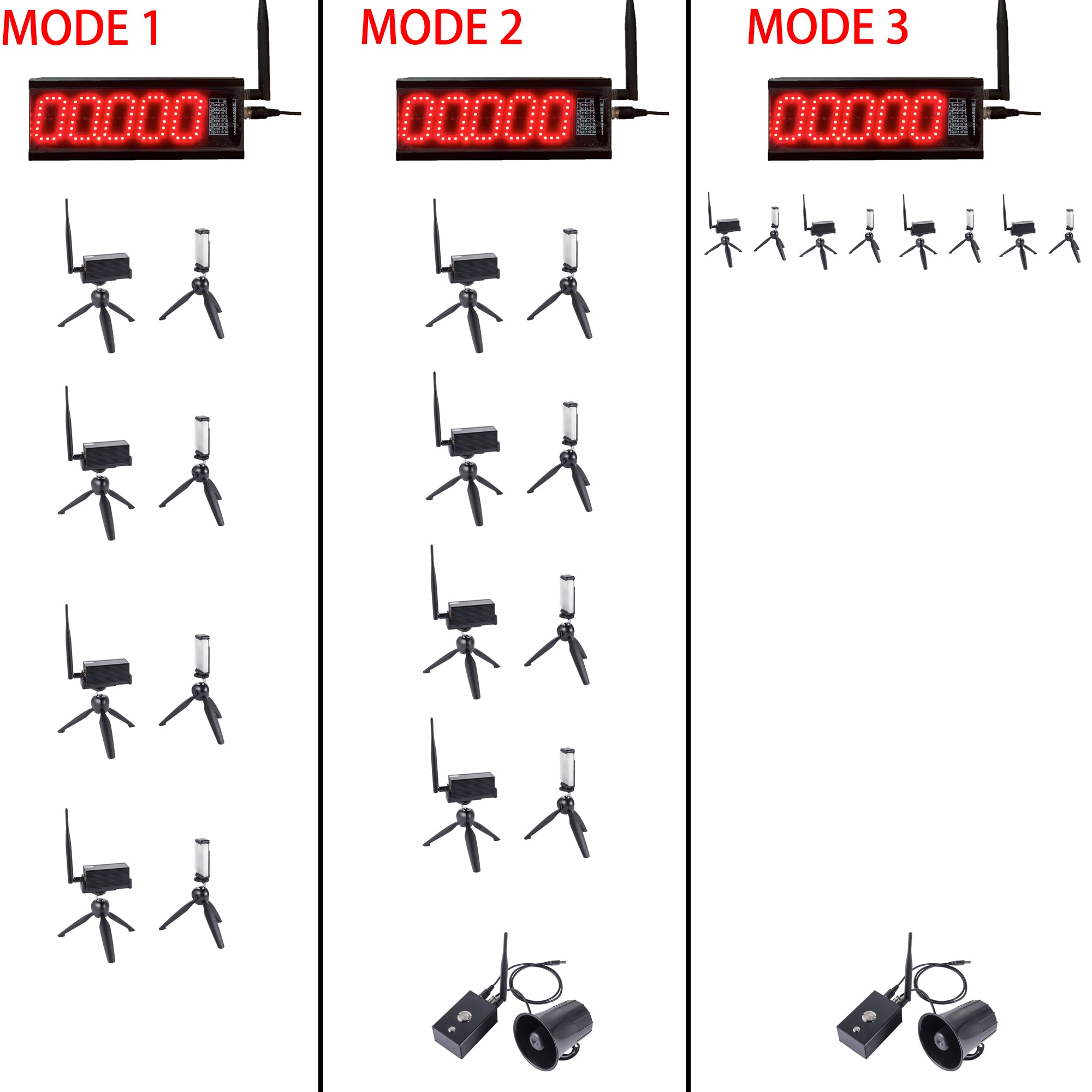
The S-007 product page describes a multi-point laser timing system that can support interval or segment layouts. That does not establish that every bicycle, rider, wheel or frame shape will trigger a chosen beam in the desired way. Ask the supplier whether the selected package is suitable for the intended cycling layout and which sensors, mounts and operating mode are included.
Test the full range of bicycles and rider positions expected at the venue. A beam height that works for one frame may be blocked by a pedal, another component or someone standing beside the lane. Make controlled crossings at the intended pace and direction, then verify that exactly one start and one finish event appear for the right rider. The gate alignment guide provides a general crossing-check routine; final placement must be validated on the actual course.
Use a departure rule that protects both riders and data
Release one rider at a time, with enough separation that the previous rider has exited the run-out before the next reaches the measured zone. Assign a visible rider ID at the start and have the results operator confirm it against the recorded attempt. A marshal should control the approach, while another person watches the finish and the clear run-out. Agree on a stop signal and a plan for a rider who slows, swerves or does not trigger a gate.
Do not mix rolling-start times with standing-start results in one ranking. Standing-start trials include acceleration from rest; a rolling trial starts timing only once the rider enters the measured zone. The start-method guide illustrates how a different start event changes what a result represents, even on the same measured distance.
Report time, distance and an honest interpretation
| Record | Why it matters |
|---|---|
| Rider and attempt ID | Connects the time to the correct run |
| Course version and measured distance | Defines the segment actually timed |
| Start and finish event status | Separates a complete run from an incomplete one |
| Start method and run-in rule | Prevents accidental comparisons with standing starts |
For a complete result, average speed over the measured zone can be calculated from the surveyed distance divided by the elapsed time, with consistent units. That number is not a peak speed, and it cannot tell you where within the zone acceleration occurred. If an intermediate point is part of the confirmed package, the S-007 multi-point layout guide helps name splits and check their order; otherwise do not imply that a two-gate result contains them.
Keep incomplete trials visible as exceptions rather than quietly deleting them. The result export guide covers IDs and traceable rows. If communication or a gate event fails, use the connection check and pause new departures until a controlled pass succeeds. For an equipment proposal, send the course sketch and actual bicycle types through the quote form.
Rolling-start questions
What is the best run-in distance?
There is no universal value. Choose one the venue can accommodate safely and document the same rule for each rider.
Can rolling and standing results share a leaderboard?
Keep them separate. The clock starts at a different point in the rider's effort.
Is an extra split always available?
Only with a confirmed package and a tested multi-point layout; check the ordered configuration before planning the result fields.