01TIMER.COM / Timing system guides / solo sprint starts
Solo Sprint Timing: Which Start Fits S-001 or S-009?
Solo sprint timing can produce two different kinds of result with these models. The dividing line is not the distance on the track. It is whether movement at the start or an audible command defines time zero.
The decision in one sentence
Start with the S-001 product page when the test calls for a compact, sensor-triggered start-to-finish measurement. Start with the S-009 product page when a one-button voice prompt and start-gun sound should organize the athlete's start. Those are published product directions, not a claim that one model is universally more accurate or more professional.
Write that start rule at the top of the result sheet. Without it, a time can look precise while remaining impossible to compare with another session.
A coach's comparison card
| Question | S-001 direction | S-009 direction |
|---|---|---|
| What starts the test? | A sensor-triggered start event in a start-to-finish layout. | A one-button command with a built-in voice prompt and start-gun sound. |
| Best planning fit | Individual sprint testing and an entry-level timing lane. | Short sprint training where the audible start sequence matters. |
| Operator focus | Align the start and finish points and police false crossings. | Keep the command routine, athlete position and button operation consistent. |
| Published package emphasis | Separate start and finish laser units, LED display, reflectors and stands. | Control box, LED display, reflector, stands and the command function. |
| Result label | Movement-triggered elapsed time. | Command-start elapsed time. |
Choose the meaning of the result first
Suppose an athlete improves by five hundredths of a second. In a movement-triggered test, the number mainly describes travel between the timing events. In a command-start test, the elapsed time also depends on responding to the signal. Both can help a coach, but they answer different questions.
If the aim is to monitor acceleration without making reaction to a sound part of the score, a movement-triggered protocol is easier to interpret. If the aim is to rehearse a signaled start, the audible command is part of the task rather than background noise. The reaction-time testing guide explains why the physical start event and the timing start must be named separately.
Freeze the procedure for a testing block
Do not alternate start methods because one happens to be convenient on the day. Choose a protocol for the training block and keep the lane distance, warm-up, footwear, start stance, recovery and invalid-trial rules with it. If the system changes, begin a new comparison series or clearly mark the break in the data.
- Give every athlete the same explanation and one practice start.
- Mark the start position so stance changes are visible, not accidental.
- Decide whether rocking, a hand movement or an early beam crossing invalidates the run.
- Record wind, surface or weather notes when they could affect the comparison.
- Keep raw trials instead of saving only the fastest result.
The 30 m, 60 m and 100 m sprint guide provides a broader session structure. For short acceleration work, the 5 m versus 10 m split guide helps define what the measured zone should tell the coach.
Account for the actual equipment footprint
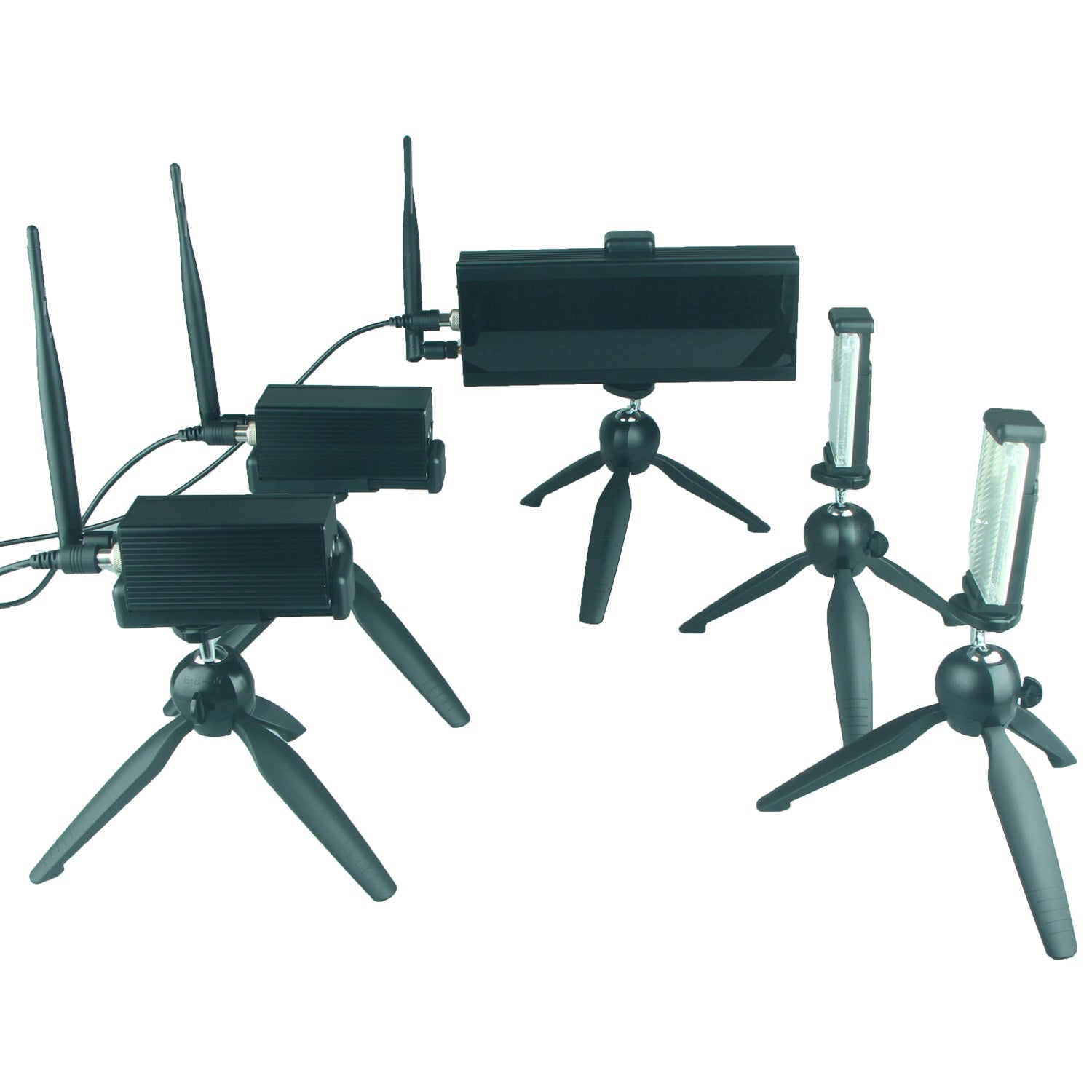
The published S-001 package lists a start laser, finish laser, one six-digit LED, two reflectors, five tripods, power cables, antennas, a screen clip and an equipment case. The S-009 package lists a control box, one six-digit LED, one reflector, two tripods, power cables, antennas, a screen clip and a case. Confirm the current contents on the product page and order record; package details can change.
That difference affects setup, not just storage. Draw where every stand goes and who can walk near each beam. Place the display where the intended reader can see it without entering the lane. The LED display visibility guide covers viewing distance, glare and safe placement.
Run a three-trial acceptance check
Before recording athletes, make three test runs. The first confirms that the system starts and stops in the intended order. The second checks repeatability with the same route. The third is deliberately invalid: cross a beam early, hesitate at the command or enter from the side. The operator should be able to identify and reject that result.
This is also the moment to check power, mounting, reflector alignment and the result display. Use the alignment and beam-height guide and keep the field spare-parts checklist with the equipment case.
Do not merge unlike records
A spreadsheet should include model, start method and protocol version beside every trial. “10 m sprint” is not a sufficient test name if one date used a sensor start and another used a voice command. A practical naming pattern is 10 m: movement start, standing stance or 10 m: voice command, standing stance.
When results move between a timing device and a team roster, follow the checks in the athlete testing data workflow. That preserves athlete identity and trial order without pretending the two start definitions are equivalent.
Working choice: select S-001 when you want the athlete's movement through a defined start event to begin a simple solo sprint. Select S-009 when a consistent audible command is part of the test. Confirm the current operating mode and package for the exact session before ordering.
Questions coaches ask before choosing
Is S-009 automatically a reaction-time system?
Do not assume that label. Its published workflow includes a voice prompt and start-gun sound, but the exact relationship between the signal and recorded time should be confirmed for the selected mode.
Can S-001 be used with small groups?
Its published use case includes individual and entry-level testing. A small group can rotate through one lane, provided the coach controls the queue, recovery and athlete identity.
Where can I confirm the final setup?
Use the product page for current specifications and send the test distance, start rule, venue and display requirement through the request-a-quote form when the standard description leaves a question.