01TIMER.COM / Timing system guides / hurdle practice splits
How to Time Hurdle Intervals Without Changing the Test
A coach may want to know how an interval changed, not just how the full race time changed. Start by defining the two events that bound that interval.
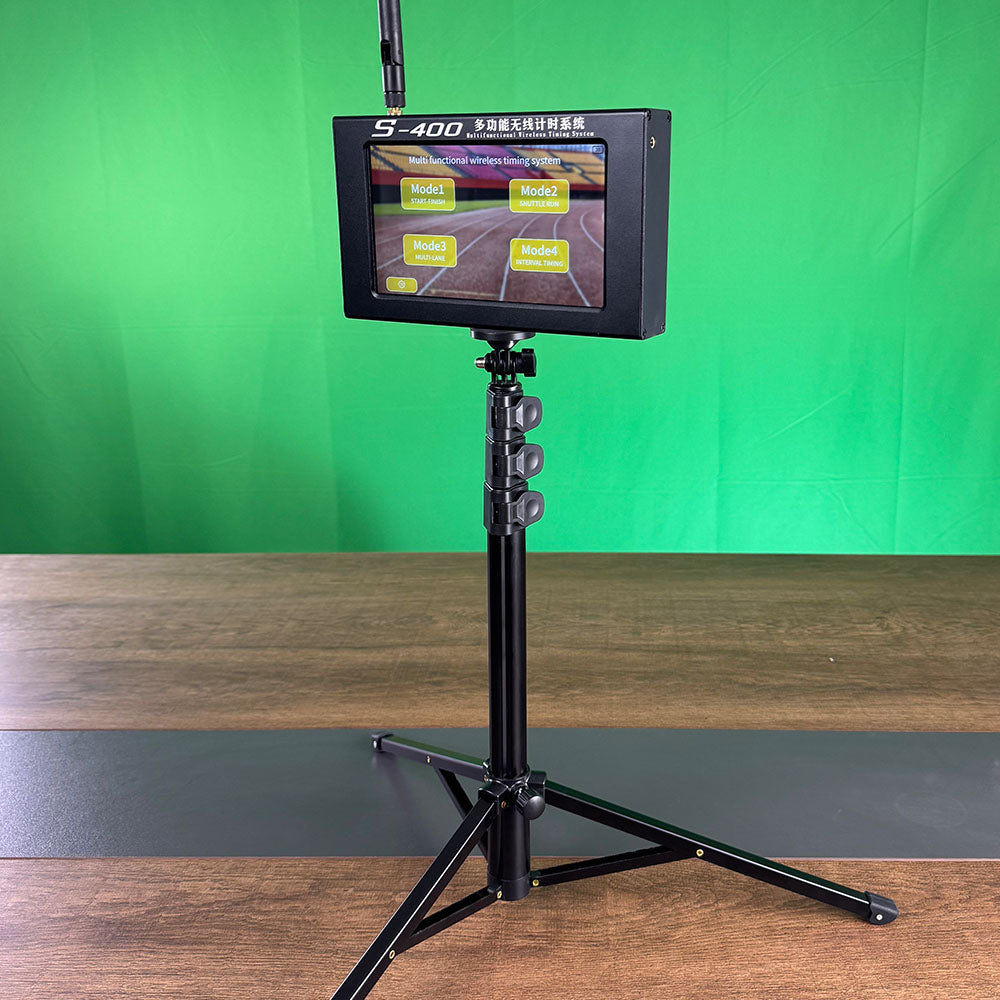
Hurdle interval timing uses checkpoints to record an elapsed time across a chosen section of a hurdle practice. The S-400 product page describes a configurable wireless system for sprint gates, stage points and multi-gate layouts. Sensor selection and mode depend on the confirmed package. A gate reading does not assess hurdle clearance, contact, rhythm quality or event legality; a coach must observe those separately.
Choose a section that answers a practice question
Decide whether you are checking the approach to the first hurdle, a repeated middle interval or the run-out after the last hurdle. Then put the start and finish events on a lane diagram. Use names that identify the section, such as “start-to-H1” or “H3-to-H4,” rather than “split two.” If the workout changes hurdle spacing, the label needs a new course version.
The cumulative and segment-time guide clarifies whether the result starts at the athlete's first event or at an earlier checkpoint. For hurdle work, that distinction matters when a coach changes the entry gate to study a different portion of the run.
Keep the equipment and athlete path separate
Any hardware must sit outside the athlete's foot path, hurdle landing area and marshal route. Do not position tripods where a hurdler could clip them after a misstep. Laser beams and sensor mounts must be installed according to the selected product's instructions. If there is no safe way to run a beam across the lane, choose a different measurement method rather than squeezing equipment between hurdles.
Before inviting athletes, have the operator walk the lane and check each station against the map. Confirm that an ordinary pass registers once in the right order. Repeat from the direction athletes will use and with the lane clear of people. The gate alignment guide covers basic alignment; the outdoor conditions guide covers changes in weather and surface that can affect a field session.
Run the same protocol across attempts
Record hurdle spacing, lane, approach start and interval boundaries before the first scored run. Keep the same athlete direction and start instruction. If the coach moves a hurdle or sensor, pause and update the layout version. A result collected before the move belongs to the earlier layout, even if the timing points appear close together.
Use one athlete for an unscored rehearsal, then check the station names against the operator display. If the layout supports multiple points, confirm each selected point in sequence. The S-007 multi-point layout guide explains point maps and rehearsals; the selected S-400 configuration should be confirmed with the same care before use.
| Field | What it preserves |
|---|---|
| Athlete and attempt ID | Which run produced the event sequence |
| Lane and hurdle layout version | Where the measured interval was located |
| Start and finish station names | What the split actually means |
| Coach observation | Clearance, contact or rhythm notes outside the timer result |
Review the interval beside, not instead of, coaching notes
If a time changes, check that the same gates, spacing and approach rule were used. Then look at the coach's observations. A changed interval can reflect a different pace, a changed stride pattern, a disrupted run or a missed sensor event. It is not a diagnosis by itself.
Keep the raw event record and the athlete roster together with the CSV export and roster guide. If there is a missed split, mark it as incomplete. Do not manufacture an intermediate time from the overall result. For a multi-point proposal, share the lane map, hurdle positions and desired station names through the quote form.
Coaches who also run straight-line sprints can compare their protocols with the 30 m, 60 m and 100 m testing guide, or review the team session workflow for queue and result ownership. Contact 01TIMER support with the exact model and proposed gate arrangement if sensor suitability is unclear.
Hurdle timing questions
Can I time every interval in a hurdle race?
Only if the selected setup can support the planned points and the installation remains safe. Confirm the package and rehearse the full order first.
Does an interval time show a hurdle contact?
No. Use the coach's observation or the event's approved review method for contact and clearance.
What if one point is missed?
Mark the result incomplete, preserve the other observed events and follow the session's rerun rule.