01TIMER.COM / Timing system guides / capacity planning
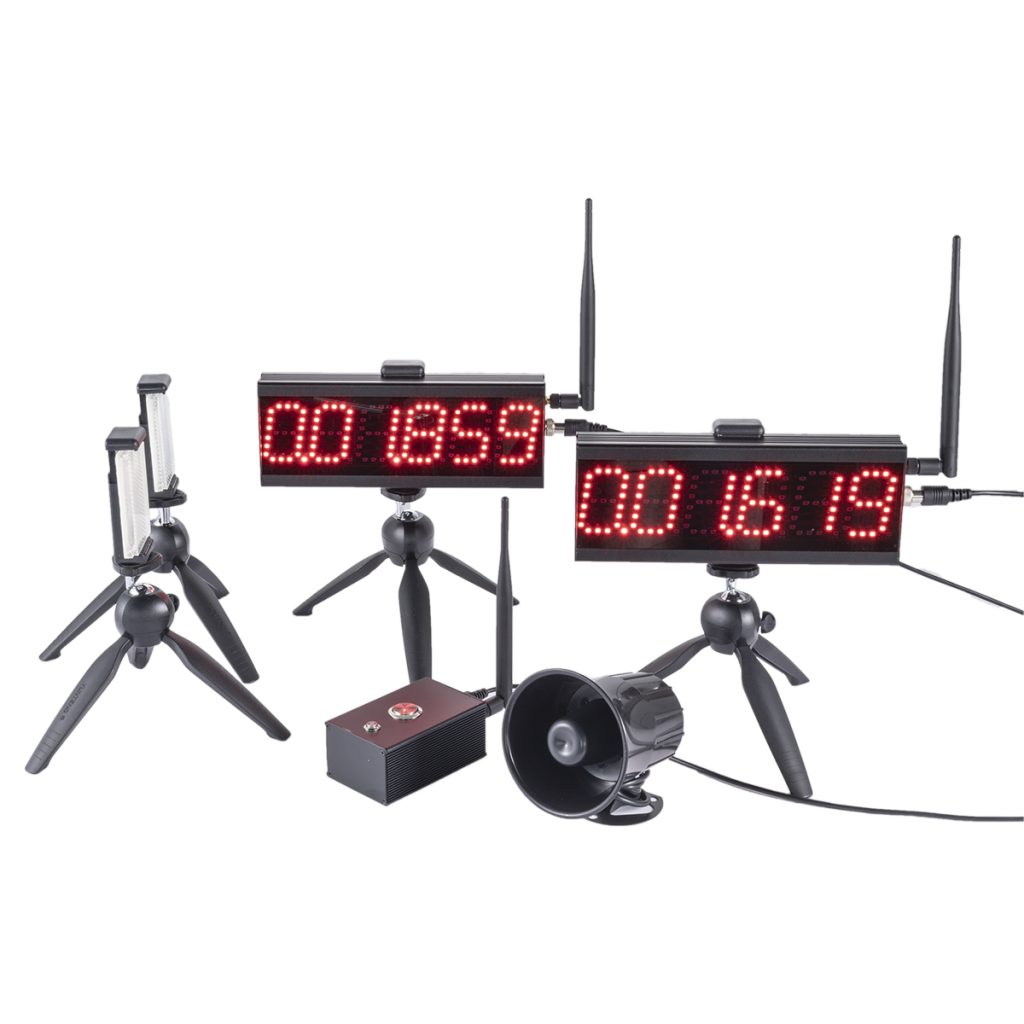
Plan Lane and Session Capacity With S-003 or S-004
“How many lanes?” sounds like an equipment question. On testing day it is really a flow question: how many athletes can be identified, started, timed, recovered and recorded without losing control of the data?
First, separate lanes from channels
The S-003 product page describes two-lane or two-channel competition timing. Its published modes include two-person competition and one-person start-to-finish timing. That makes the model easy to picture as a paired heat or a single lane used in sequence.
The S-004 product page describes four-channel competition timing. Those channels may support a four-stage short sprint for one athlete or race timing for as many as four simultaneous starters, depending on the setup. Four channels therefore do not always mean four lanes. A channel can mark another timing stage instead.
Use this session-capacity worksheet
| Operational need | S-003 plan | S-004 plan |
|---|---|---|
| Side-by-side comparison | Two athletes or two testing channels. | Up to four simultaneous starters when configured for that mode. |
| One-athlete profiling | Start-to-finish result. | Four-stage short sprint with intermediate information. |
| Result visibility | Published package lists two six-digit LED displays. | Published package lists four six-digit LED displays. |
| Field footprint | Two reflectors and four tripods are listed. | Four reflectors and eight tripods are listed. |
| Primary risk | Mixing lane identities in paired heats. | Mislabeling channel roles in a larger layout. |
| Crew question | Can one recorder follow two athletes? | Who owns check-in, start, channel checks and result validation? |
Calculate real throughput, not theoretical starts
Write down the full heat cycle: call athletes, place them, check the lane, issue the command, run the trial, read or record the result, clear the finish and reset. If that cycle takes two minutes, a two-lane heat does not automatically equal sixty valid results per hour. Warm-ups, recovery, reruns and identity checks consume part of the hour.
A simple planning formula is valid athletes per heat multiplied by completed heats per hour, then reduced by a contingency allowance for repeats and interruptions. Use the same formula for both models. S-004 creates more possible timing roles, but the extra capacity is useful only when staff and the result workflow can support it.
The team speed testing workflow shows how roster control and queue design affect output. For repeated efforts, also use the recovery and invalid-trial rules in the repeated sprint timing guide.
Choose S-003 for a clean paired rhythm
S-003 is a practical direction when competition between two athletes is the session format, or when two tracks help a coach move a moderate roster without creating a large operating team. Use visible lane letters and make the result sheet mirror those letters. Athlete A should never become “left runner” in one row and “lane 1” in the next.
The published package lists a wireless control box, two LED displays, two reflectors, a command speaker, four tripods, power cables, screen clips and an equipment case. Check the current product page before ordering. The existing S-003 dual-track session guide provides a detailed lane check and heat sequence.
Choose S-004 when the channels have named jobs
S-004 makes sense when four simultaneous starters are a real requirement or when one athlete must be measured through several stages. Before placing hardware, draw four boxes and name each channel. In a split layout, the labels might be start, 5 m, 10 m and finish. In a multi-starter layout, they may instead correspond to separate athlete routes. Confirm the supported mode and operating sequence rather than carrying labels from one layout into another.
The listed package includes a control box, four LED displays, four reflectors, a command speaker, eight tripods, power cables, screen clips and two cases. A larger inventory also means a longer pre-session count. The S-004 four-channel guide covers channel maps and the 5 m versus 10 m article helps turn intermediate points into a coaching question.
Build the heat sheet before the field layout
Create ten sample rows with athlete IDs before deciding that more channels will save time. For two lanes, each row needs a heat number, lane A athlete, lane B athlete, result fields and validity notes. For four starters, add four stable lane identities. For a four-stage individual test, one athlete row needs clearly named segment fields rather than four athlete columns.
Then simulate a problem: one athlete is absent, one trial is invalid and one result needs review. If the sheet cannot preserve the identities, the equipment layout is too complex for the current workflow. The CSV and roster guide offers a safe structure for moving results into a team record.
Assign staff by responsibility
- Check-in: calls the correct athletes and confirms their lanes.
- Start operator: uses one command sequence and records false starts.
- Course checker: keeps athletes and bystanders away from active timing paths.
- Recorder: matches displayed results with the heat sheet before the next heat.
- Session lead: decides whether an interrupted or unusual trial is valid.
One person may cover several roles in a two-lane session. A four-starter or multi-stage layout often needs more separation. Place displays according to the intended reader, using the display visibility checklist.
Capacity rule: use S-003 when two-lane competition or a simple start-to-finish workflow matches the roster. Use S-004 when four simultaneous starters or four named timing stages solve a defined need and the crew can manage the added equipment and data.
Questions about lanes and channels
Will S-004 always process twice as many athletes as S-003?
No. The operating mode, heat cycle, staffing and recovery schedule determine practical throughput. A four-stage test for one athlete serves a different purpose from four simultaneous starters.
Can S-003 time one athlete?
Yes. Its current product page describes a one-person start-to-finish mode as well as two-person competition.
What should a buyer send for confirmation?
Send the course diagram, number of athletes per heat, number of timing stages, display positions and crew plan through the request-a-quote form. Ask for the exact mode and package to be confirmed in writing.