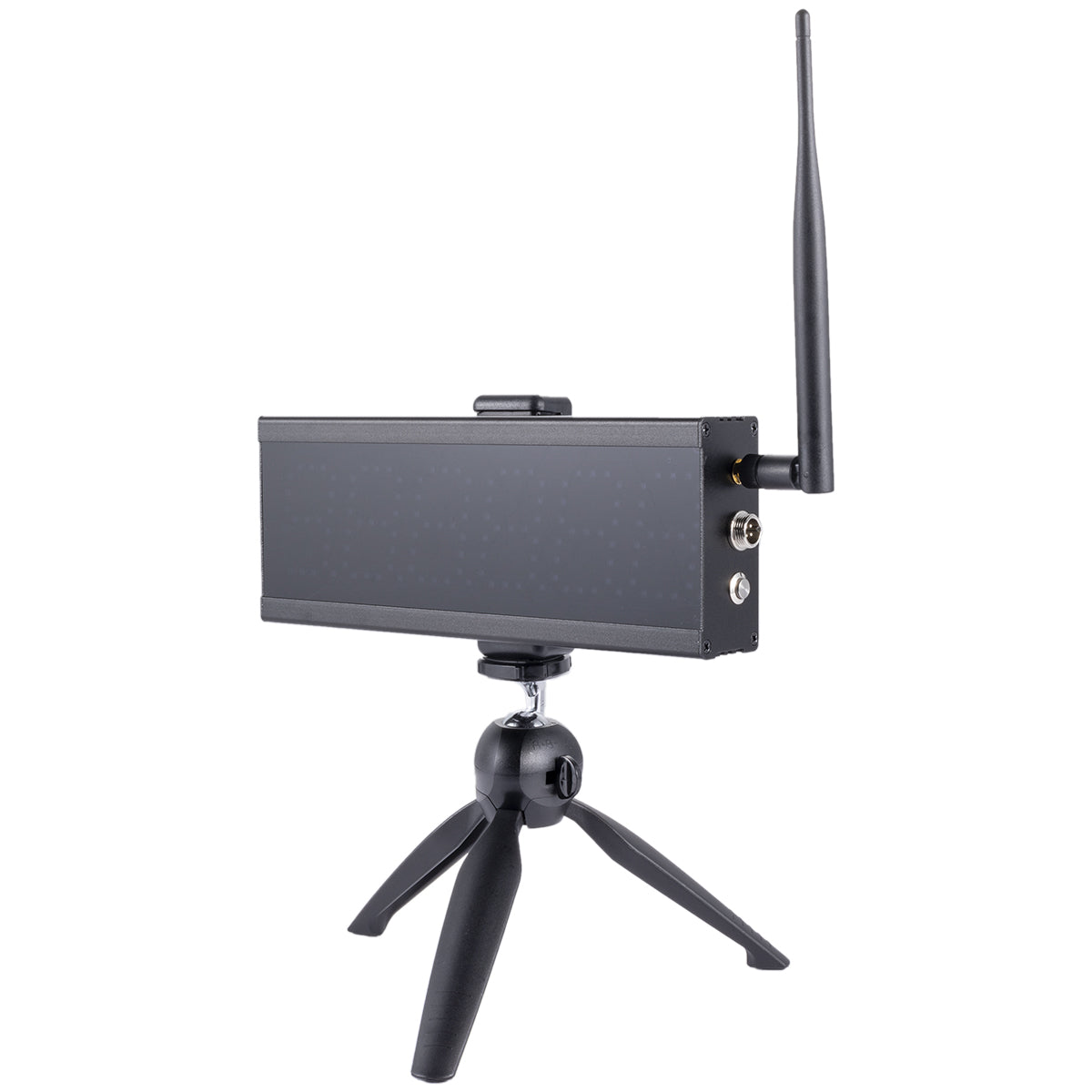
Mark 5, 10, 15 and 20 m from one start reference. Record 5 m and 10 m cumulative times plus the 20 m total. Keep a clear run-out after the last beam and separate ball-dribbling trials from unencumbered sprinting.
What the handball sprint study found
Fristrup and colleagues tested elite female team handball players using dual-beam photocells. The field protocol used a 20 m maximal sprint with visual marks at 5 m intervals through 25 m. The 25 m mark gave players room to continue past the 20 m timing point rather than braking on the finish beam.
At retest one week later, Fristrup and colleagues reported intraclass correlation coefficients (ICC) of 0.83 and 0.90 for 10 m and 20 m, with within-subject coefficients of variation of 1.9% and 1.5%. The 5 m result was less consistent in this sample: ICC 0.71 and CV 2.8%. These are findings for elite female players in that protocol, not targets for every age group or club.
The authors also tested sprints while athletes dribbled a handball. Those times improved from test to retest at 5, 10 and 20 m. A coach should therefore schedule familiarization for the ball task and keep its scores separate from a free sprint. A player learning the dribble route can look faster without a change in straight-line acceleration.
Mark the sprint and the run-out
Use the same stance and start line each session. In a short sprint, shifting the athlete forward or leaning into the first beam can change the time before their acceleration has changed. The article's study used dual-beam photocells; your own equipment may use a different beam configuration, so describe the start distance and trigger event in the test record.
Measure every point from one baseline. Do not measure 5 m from one tripod, then estimate the next interval from a court marking. A small placement error compounds across multiple gates. The beam-height and alignment guide explains how to check the sensor plane. Use a straight lane with no player crossing the beams beside the athlete.
Keep a safe deceleration zone after 20 m. The study marked out to 25 m; the distance is a course-management detail, not another timed split unless you configure and label it. The outdoor timing guide covers surface and weather notes that should accompany an outdoor test.
Label cumulative and segment times correctly
If the display records elapsed time from the start to each point, the 5 m and 10 m numbers are cumulative. The 5-to-10 m segment is calculated by subtracting the 5 m cumulative time from the 10 m cumulative time.
Do not put a cumulative 10 m time in a column labelled "5-10 m split." That mistake can make an athlete appear to lose speed when the sheet is simply comparing different intervals. The 5 m versus 10 m split guide and cumulative versus segment timing explainer show the distinction.
| Record field | Example label | Meaning |
|---|---|---|
| First checkpoint | 0-5 m | Elapsed time from start to the 5 m beam |
| Second checkpoint | 0-10 m cumulative | Elapsed time from start to the 10 m beam |
| Interval calculation | 5-10 m segment | 10 m cumulative minus 5 m cumulative |
| Full course | 0-20 m cumulative | Elapsed time from start to the 20 m beam |
Separate the ball test from the sprint test
Use two test names if one session includes a free sprint and a sprint with dribbling. Keep the surface, start method, warm-up, footwear, rest period and beam positions the same where the purpose is to compare sessions. For the dribble task, set the ball-handling rule before the trial and mark any lost ball, missed control or route error.
Give athletes a practice run before recording baseline values. The study's retest improvement during dribbling makes familiarization more than a paperwork detail. Log the number of practice attempts and use the same rule when the squad repeats the test. The athlete-testing workflow and field-test template help keep those conditions beside the score.
For a single-run setup, see the S-001 individual timing guide. Teams comparing athletes across lanes can review the S-003 dual-track workflow and team testing day plan. Confirm that the selected system records the exact splits you intend to report; a displayed time increment does not define which course interval it represents.
Store every valid time and the trial order. Report best, mean or another summary only after deciding which one answers the coaching question. The CSV export guide covers athlete IDs and result columns.
Handball sprint timing questions
Should the first gate sit on the start line?
Use the setup required by the product and document where the athlete starts relative to the beam. Do not let athletes begin with a body part already breaking the first sensor.
Can I use published elite handball times as team targets?
Use published results as context, not universal cutoffs. Age, sex, competitive level, start method, surface and test familiarity all affect a sprint score.
Do I need a 25 m gate if I only report 20 m?
No. In the cited study, 25 m was a visual target beyond the timed 20 m point, leaving room to decelerate. A separate 25 m gate is only needed if that distance is part of your recorded data.
Research and method sources
- Fristrup et al. (2024), Test-retest reliability of lower limb muscle strength, jump and sprint performance tests in elite female team handball players.
- Hopker, Coleman, Wiles and Galbraith (2009), Familiarisation and reliability of sprint test indices during laboratory and field assessment.
- Haugen and Buchheit (2016), Sprint running performance monitoring: methodological and practical considerations.